


 English
 Español
 Deutsch
 日本語
日本語 Polska
 한국의
한국의 Українська
 Italiano
 Nederlands
 Türkçe
 Português
 Bahasa Indonesia
 Русский
 中國
中國 हिंदी
हिंदी
















balle Modèles 3D
Nous avons 3178 produit(s) Libre de droits ball Modèles 3D. Achetez ou téléchargez des modèles 3D gratuits pour vos projets CG, production cinématographique et vidéo, animation, visualisations, jeux, VR/AR et autres. Vous pouvez télécharger n'importe quel modèle 3D dans tous les formats 3D populaires, notamment MAX, OBJ, FBX, 3DS, STL, C4D, BLEND, MAYA
- -50%
 brunonunesdpAnatomy
 - -50%
 proart1zoneSports Equipment
 - -50%
 turbocgPlayground
 - -50%
 turbocgPlayground
 - -50%
 turbocgPlayground






























Recherches tendances Modèles 3D:
Sculpture Modèles 3D Personnages Modèles 3D Cuisine Modèles 3D Chevale Modèles 3D Architecturaux extérieurs Modèles 3D Téléphone et téléphone portable Modèles 3D Légume Modèles 3D Bijoux Modèles 3D Jouets Modèles 3D Médical Modèles 3D Hélicoptère Modèles 3D Armes lourdes Modèles 3D Camion Modèles 3D Anatomie Modèles 3DQ1 : Quels types de modèles de balles 3D sont disponibles sur 3DExport ?
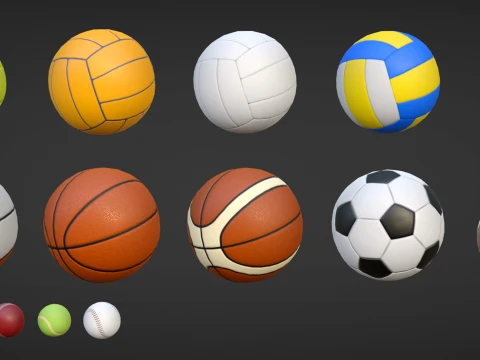
Les ballons de sport couvrent les catégories classiques : football, basketball, tennis, baseball, volleyball, rugby, football américain et golf. Au-delà du sport, on trouve des variantes stylisées : sphères d'énergie lumineuses, boules de cristal, ballons rebondissants de style cartoon, boules de billard et de flipper. La distinction entre un ballon de simulation sportive et un accessoire de jeu est importante : un ballon de football réaliste nécessite une géométrie correcte à 32 panneaux (12 pentagones et 20 hexagones pour un design traditionnel) avec un mapping UV approprié pour un suivi de rotation réaliste ; un ballon de style cartoon doit simplement avoir un aspect amusant. Pour la simulation physique dans les moteurs de jeu, la collision primitive sphérique est presque toujours utilisée, quel que soit le maillage visuel ; la complexité visuelle n'a donc pas d'impact sur les performances.Q2 : Quel est le meilleur modèle de balle 3D pour une simulation physique réaliste dans les jeux ?
Le maillage lui-même n'a quasiment aucun impact sur la simulation physique : Unreal Engine et Unity utilisent tous deux une primitive de collision sphérique pour la physique de la balle, quelle que soit la complexité du maillage visuel. Le modèle visuel doit simplement être correct. Ce qui compte pour une balle réaliste, c'est la configuration des matériaux : un ballon de football nécessite un matériau PBR avec une surface légèrement rugueuse, semblable à du cuir, qui capte correctement la lumière directionnelle ; une boule de billard nécessite une forte spécularité et un brillant quasi parfait. Le comportement physique est entièrement contrôlé par les paramètres physiques du moteur de jeu (friction, restitution (rebond), traînée), et non par la géométrie. Une balle de 500 polygones avec les matériaux appropriés se comporte de la même manière qu'une balle de 50 000 polygones, du point de vue physique.Q3 : Est-il possible d’imprimer en 3D des modèles de balles 3D ?
Facilement — une sphère est l'une des formes géométriques les plus faciles à imprimer, à condition qu'il s'agisse d'un solide fermé. Les sphères pleines simples s'impriment sans supports si leur taille est suffisante pour le plateau d'impression. Les billes creuses nécessitent une épaisseur de paroi d'au moins 1,2 mm pour une bonne intégrité structurelle sur les imprimantes FDM. Les billes texturées — comme les alvéoles d'une balle de golf — s'impriment bien si les alvéoles sont en creux plutôt qu'en relief. Les reliefs inférieurs à 0,4 mm (la largeur d'extrusion minimale sur la plupart des imprimantes à buse de 0,4 mm) ne s'impriment pas proprement. Pour les boules décoratives aux motifs de surface complexes, l'impression résine (SLA/MSLA) permet d'obtenir des détails beaucoup plus fins que la technologie FDM.