
 English
 Español
 Türkçe
















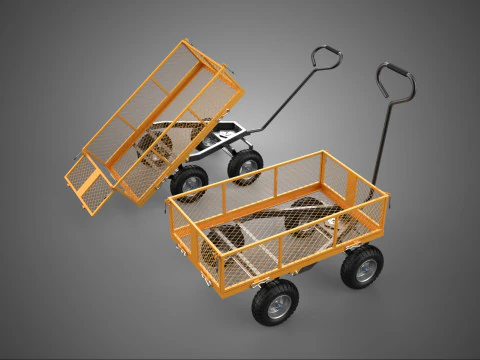
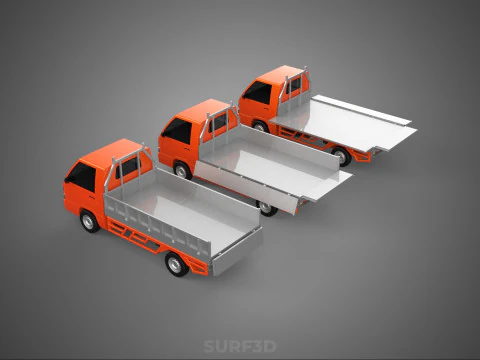
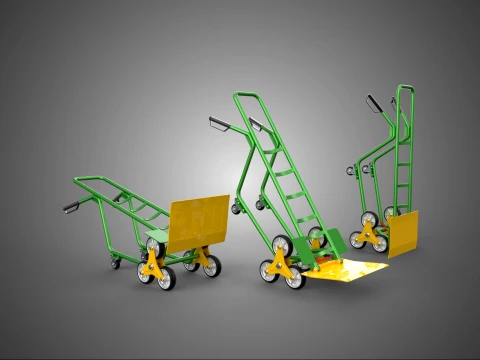
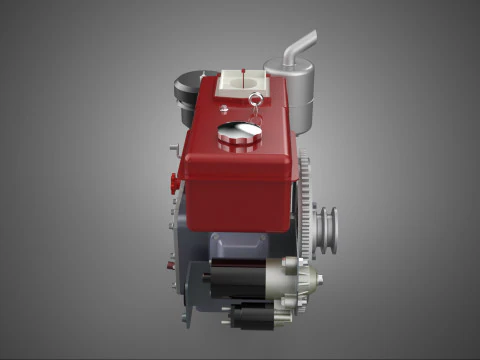
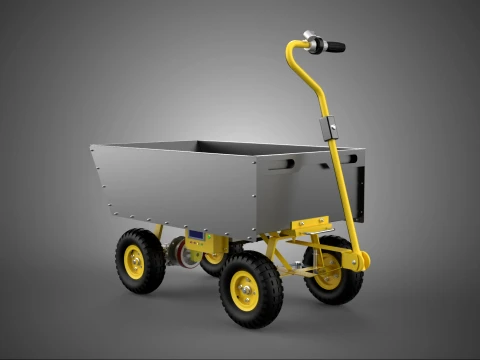
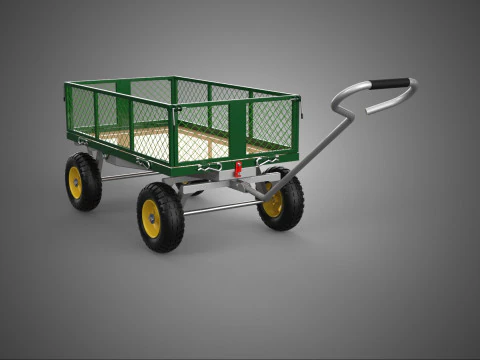
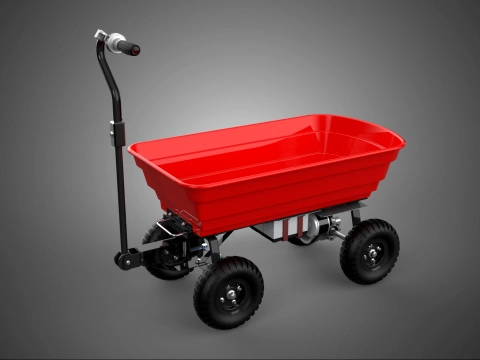
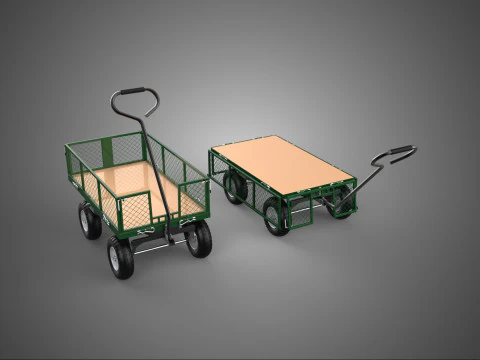
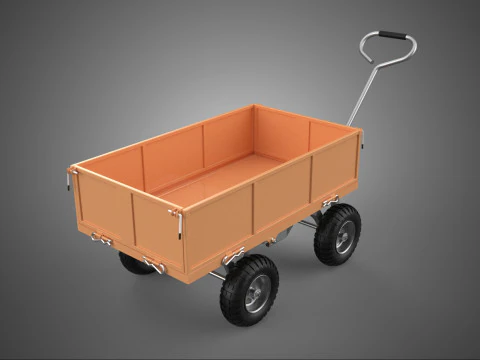
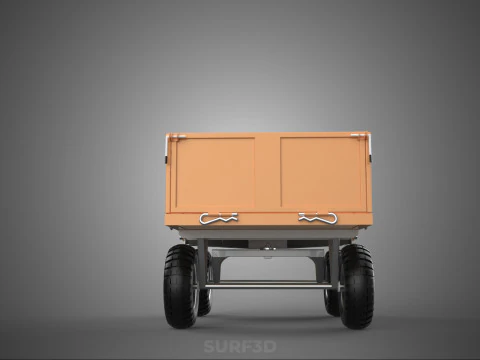
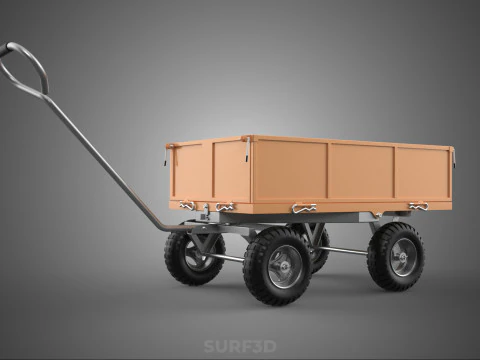
KAYU KAYU TEMPAT TIDUR KAYU KERANJANG TRUCK TROLLEY TRANSPORT WHEELBARROW 4 Model 3D









- Minta dukungan produk oleh penulis


- Format yang tersedia:
- ID Barang:628992
- Tanggal: 2026-02-17
- Poligon:236185
- Sudut:190348
- Animasi:No
- Bertekstur:No
- Dimanipulasi:No
- Material:
- Low-poly:No
- Koleksi:No
- Pemetaan UVW:No
- Plugin Digunakan:No
- Siap Cetak:No
- Pindai 3D:No
- Konten Dewasa:No
- PBR:No
- AI Pelatihan:No
- Geometri:Poly NURBS
- Unwrapped UVs:Unknown
- Tampilan:391
Deskripsi
High-quality 3D assets at affordable prices — trusted by designers, engineers, and creators worldwide. Made with care to be versatile, accessible, and ready for your pipeline.
Included File Formats
This model is provided in 14 widely supported formats, ensuring maximum compatibility:
• - FBX (.fbx) – Standard format for most 3D software and pipelines
• - OBJ + MTL (.obj, .mtl) – Wavefront format, widely used and compatible
• - STL (.stl) – Exported mesh geometry; may be suitable for 3D printing with adjustments
• - STEP (.step, .stp) – CAD format using NURBS surfaces
• - IGES (.iges, .igs) – Common format for CAD/CAM and engineering workflows (NURBS)
• - SAT (.sat) – ACIS solid model format (NURBS)
• - DAE (.dae) – Collada format for 3D applications and animations
• - glTF (.glb) – Modern, lightweight format for web, AR, and real-time engines
• - 3DS (.3ds) – Legacy format with broad software support
• - 3ds Max (.max) – Provided for 3ds Max users
• - Blender (.blend) – Provided for Blender users
• - SketchUp (.skp) – Compatible with all SketchUp versions
• - AutoCAD (.dwg) – Suitable for technical and architectural workflows
• - Rhino (.3dm) – Provided for Rhino users
Model Info
• - All files are checked and tested for integrity and correct content
• - Geometry uses real-world scale; model resolution varies depending on the product (high or low poly)
• • - Scene setup and mesh structure may vary depending on model complexity
• - Rendered using Luxion KeyShot
• - Affordable price with professional detailing
Buy with confidence. Quality and compatibility guaranteed.
If you have any questions about the file formats, feel free to send us a message — we're happy to assist you!
Sincerely,
SURF3D
Trusted source for professional and affordable 3D models.
More Information About 3D Model :
The designation "WOOD WOODEN BED WAGON CART TRUCK TROLLEY TRANSPORT WHEELBARROW 4" refers to a functional category of non-motorized utility conveyances, characterized primarily by their timber construction and a standardized, flat loading surface—the "bed." This terminology is often utilized in cataloging systems (such as museum inventories, historical engineering records, or specialized libraries) to group a diverse range of hauling apparatus essential to pre-industrial, agricultural, and early industrial material logistics. The numeral '4' typically denotes a specific model, variant, or—in design typology—a four-wheeled configuration, differentiating it from two-wheeled carts or single-wheeled barrows.
### Nomenclature and Classification
The comprehensive nomenclature reflects the evolutionary relationship between various historical transport devices. The term "bed" (or 'deck') is crucial, defining the apparatus as an open-top cargo platform, distinct from enclosed vessels or specialized containers.
1. **Wagon/Cart:** Implies an outdoor or agricultural application, typically pulled by draft animals or manually hauled using a tongue or drawbar. Carts are generally two-wheeled; wagons, particularly those associated with the index '4', are four-wheeled.
2. **Truck/Trolley:** Suggests applications within defined, often indoor, industrial or warehouse environments (e.g., factory floors, rail depots). These devices are engineered for short-distance, high-frequency movement of processed goods or raw materials.
3. **Wheelbarrow:** A single- or two-wheeled device requiring manual lifting and pushing, designed for navigating rough terrain or confined spaces. Its inclusion in this grouping highlights the shared timber construction and fundamental utility purpose.
### Construction and Engineering
The engineering principles governing these wooden transport vehicles prioritize strength, low manufacturing cost, and field repairability.
**Materials:** Primary construction utilizes durable hardwoods, such as oak, ash, or hickory, selected for their tensile strength, ability to absorb vibration, and resistance to warping. The bed itself typically consists of closely joined planks reinforced by lateral battens or cross-members.
**Joinery:** Traditional carpentry techniques dominate the construction. Mortise-and-tenon joints, secured by wooden pegs (treenails) or iron bolts, are standard for assembling the chassis and frame. Metal components—historically wrought iron, later steel—are used selectively for high-stress points: axle spindles, wheel rims (tyres), and corner bracing.
**Chassis and Axles:** In the four-wheeled "wagon" or "truck" typology (implied by the '4'), the chassis features a robust frame supporting the bed. Mobility is facilitated by a fixed rear axle and a pivoting front axle assembly (known as the 'fifth wheel' mechanism or 'bogie'). This steering mechanism is critical for enabling tight turning radii necessary for maneuvering heavy loads in constrained spaces like farmyards or warehouse aisles. The wooden wheels themselves often possess thick spokes and iron tires to withstand the friction and abrasion of daily use.
### Utilitarian Context and Historical Significance
Wooden utility transport devices were foundational elements of logistics systems from antiquity through the early 20th century.
**Agriculture:** Wooden wagons and carts were essential for harvesting, transporting fodder, and moving implements. Their designs were optimized for stability on uneven agricultural terrain.
**Industry and Commerce:** Wooden factory trucks (trolleys) facilitated intra-facility transport before the advent of mechanized conveyor belts and forklifts. These hand-drawn trucks were ubiquitous in textiles mills, foundries, and dockyards, carrying loads significantly heavier than those managed by a traditional wheelbarrow.
The cultural significance of these objects resides in their representation of manual labor, traditional craftsmanship, and the efficiency of low-technology engineering solutions tailored to specific utilitarian needs. Preserved examples serve as crucial artifacts illustrating historical material culture and the evolution of logistics.
KEYWORDS: Wooden transport, Utility cart, Farm wagon, Industrial trolley, Material handling, Timber construction, Dray, Four-wheeled truck, Wheelbarrow, Axle mechanism, Fifth wheel, Logistics artifact, Hardwood chassis, Historical engineering, Manual conveyance, Cargo bed, Load platform, Joinery, Pre-industrial, Agricultural equipment, Warehouse truck, Hand truck, Draft conveyance, Mobile platform, Chassis design, Wheeled vehicle, Rural technology, Inventory classification, Spoked wheel, Utilitarian design.
Perlu lebih banyak format?
Jika Anda membutuhkan format yang berbeda, silakan buka Tiket Dukungan baru dan minta itu. Kita dapat mengonversi model 3D menjadi: .stl, .c4d, .obj, .fbx, .ma/.mb, .3ds, .3dm, .dxf/.dwg, .max. .blend, .skp, .glb. Konversi Format GratisKami tidak mengonversi adegan 3d dan format seperti .step, .iges, .stp, .sldprt.!
Informasi Penggunaan
KAYU KAYU TEMPAT TIDUR KAYU KERANJANG TRUCK TROLLEY TRANSPORT WHEELBARROW 4 - Anda dapat menggunakan model 3D bebas royalti ini untuk keperluan pribadi dan komersial sesuai dengan Lisensi Dasar atau Diperpanjang.Lisensi Dasar mencakup sebagian besar kasus penggunaan standar, termasuk iklan digital, proyek desain dan visualisasi, akun media sosial bisnis, aplikasi asli, aplikasi web, permainan video, dan produk akhir fisik atau digital (baik gratis maupun berbayar).
Lisensi Diperpanjang mencakup semua hak yang diberikan berdasarkan Lisensi Dasar, tanpa batasan penggunaan, dan memungkinkan model 3D untuk digunakan dalam proyek komersial tanpa batas dengan ketentuan Bebas Royalti.
Baca lebih lanjut
Apakah Anda memberikan Jaminan Uang Kembali?
Ya, kami melakukannya. Jika Anda membeli sebuah produk dan menemukan beberapa kesalahan dalam pembuatan atau deskripsi, kami akan mencoba memperbaiki masalah secepat mungkin. Jika kami tidak dapat memperbaikinya, kami akan membatalkan pesanan Anda dan Anda akan mendapatkan uang Anda kembali dalam waktu 24 jam sejak mengunduh item. Baca lebih lanjut ketentuan di siniKeywords