


 English
 Español
 Deutsch
 日本語
日本語 Polska
 Français
 Українська
 Italiano
 Nederlands
 Türkçe
 Português
 Bahasa Indonesia
 Русский
 中國
中國 हिंदी
हिंदी


















3D printing has moved far beyond hobbyist workshops and prototype labs. What once felt experimental is now steadily becoming industrial, scalable, and strategic. Over the next decade, additive manufacturing will not just improve - it will fundamentally reshape how businesses design, produce, and deliver products.
For companies already exploring advanced manufacturing technologies, the question is no longer if 3D printing matters. It is how fast they can adapt to what is coming next.
Industrial-Scale Production Will Become the Norm
For years, 3D printing was primarily associated with prototyping. That era is ending. Over the next decade, we will see a dramatic shift toward full-scale production using additive manufacturing.
Industries such as aerospace, automotive, and medical devices are already proving that 3D-printed parts can meet stringent performance and regulatory standards. The next step is scaling that capability.
What will change:
- Larger industrial printers with higher throughput
- Faster print speeds with improved layer bonding
- Integrated quality monitoring using AI-driven inspection
- Hybrid systems combining additive and subtractive manufacturing
Instead of producing parts in distant factories and shipping them across continents, companies will manufacture closer to the point of use. This shortens supply chains and reduces inventory risk.
The result is a more resilient production model - one that feels particularly relevant in a world still adapting to supply chain disruptions.
Advanced Materials Will Unlock New Applications
Materials are the true frontier of additive manufacturing. Printers get attention, but materials determine what is possible.
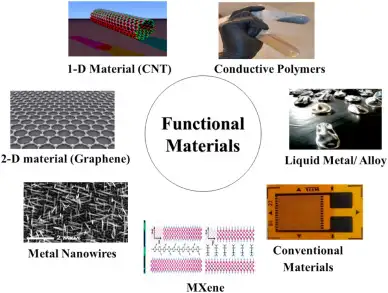
In the next ten years, we can expect major progress in:
High-performance composites
Carbon fiber-reinforced polymers and other composite blends will become more accessible and affordable, making lightweight structural parts viable for more industries.
Functional polymers
Heat-resistant, chemical-resistant, and electrically conductive materials will open doors in electronics, automotive, and industrial tooling.
Biomaterials and bioprinting
Healthcare is pushing boundaries with tissue scaffolds and customized implants. While fully printed organs may still be years away, regenerative medicine will advance significantly.
Ceramics and advanced metals
Ceramic printing will improve for high-temperature and high-wear environments, especially in aerospace and energy sectors.
As material science evolves, 3D printing will stop being a niche solution and become a practical alternative to traditional manufacturing for high-value components.
AI-Driven Design Will Redefine Engineering
The future of 3D printing is inseparable from artificial intelligence.
Traditional engineering often starts with familiar shapes - blocks, brackets, housings - then optimizes from there. But AI-powered generative design tools reverse the process. Engineers define constraints: load, weight, temperature, and cost. The software then generates structures that look organic, sometimes even alien.
These designs are often impossible to manufacture using conventional methods. But additive manufacturing makes them feasible.
The combination of AI and 3D printing will lead to lighter aircraft parts, more efficient heat exchangers, and custom-fit medical devices.
Engineering will shift from “design for manufacturing” to “design without limits.”
Distributed Manufacturing Will Gain Momentum
One of the most transformative shifts will not be technical, but strategic.
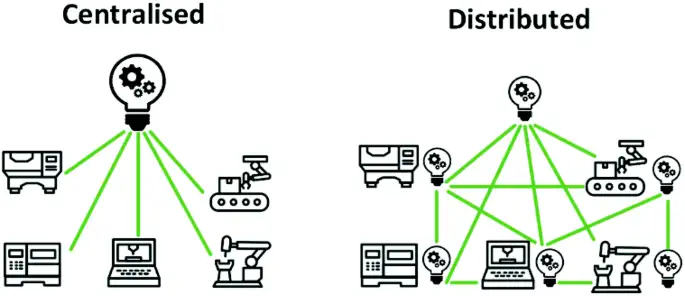
3D printing enables digital inventory. Instead of storing thousands of physical spare parts, companies can store design files and print components on demand.
This model reduces warehousing costs and eliminates overproduction. It also allows rapid localization. A company with facilities in Europe, North America, and Asia can produce the same part in each region without shipping from a central factory.
For small and medium-sized businesses, this lowers barriers to entry. They can compete with larger manufacturers by producing specialized or low-volume products profitably. The manufacturing ecosystem will become more decentralized and more flexible.
Sustainability Will Move from Marketing to Measurement
Additive manufacturing is often promoted as a sustainable solution, but the next decade will demand proof.
The sustainability advantage of 3D printing lies in:
- Reduced material waste compared to subtractive methods
- Lightweight parts that reduce fuel consumption
- Local production that lowers transportation emissions
However, energy consumption and material sourcing will face greater scrutiny.
We can expect:
- Lifecycle analysis tools integrated into design software
- Recyclable and bio-based filaments are becoming mainstream
- More efficient energy management in industrial printers
Companies will not simply claim sustainability. They will quantify it.
Education and Workforce Skills Will Evolve
Technology shifts only matter if people can use them effectively.

As 3D printing becomes more embedded in production environments, workforce training will expand beyond basic printer operation.
Universities and technical institutions are already adapting curricula. Over the next ten years, additive manufacturing literacy will become a standard engineering competency rather than a specialized niche.
Integration with Other Technologies
3D printing will not evolve in isolation.
It will integrate more deeply with:
- Robotics for automated part removal and finishing
- IoT systems for remote monitoring
- Cloud platforms for collaborative design
- Digital twins for performance simulation
Factories of the future will combine additive manufacturing with automation, data analytics, and advanced quality control systems.
The Bigger Picture
The future of 3D printing is not about replacing every traditional manufacturing process. Injection molding, CNC machining, and casting will remain critical for high-volume production.
Instead, additive manufacturing will expand the design space. It will enable faster innovation cycles, more flexible production strategies, and smarter supply chains.
For businesses, the takeaway is clear: 3D printing is moving from experimental technology to strategic infrastructure.
Companies that invest early in skills, materials research, and digital workflows will not just keep up. They will define the next generation of manufacturing.
The technology is maturing. The ecosystem is expanding. And the next ten years will determine who treats additive manufacturing as a tool - and who builds their future around it.
