


 English
 Español
 Deutsch
 日本語
日本語 Polska
 Français
 Українська
 Italiano
 Nederlands
 Türkçe
 Português
 Bahasa Indonesia
 Русский
 中國
中國 हिंदी
हिंदी
















공 무료 3D 모델
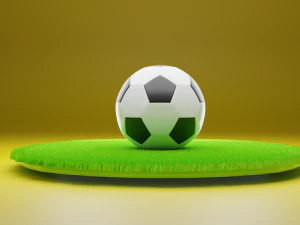
보유하고 있는 것 137 아이템 로열티 프리 ball 3D 모델. 개인 및 상업용 프로젝트에 사용할 수 있는 고품질 무료 3D 모델을 다운로드하세요.
 AlejandrordamCartoon





































인기 검색어 3D 모델:
조각 3D 모델 캐릭터 3D 모델 부엌 3D 모델 말 3D 모델 외관 3D 모델 휴대 전화 3D 모델 야채 3D 모델 쥬얼리 3D 모델 장난감 3D 모델 의료 3D 모델 헬리콥터 3D 모델 중무기 3D 모델 트럭 3D 모델 해부학 3D 모델Q1: What types of 3D ball models are available on 3DExport?
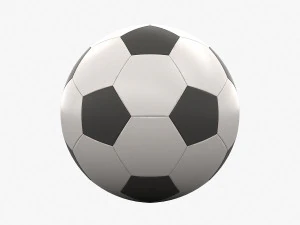
Sports balls cover the obvious categories: soccer (football), basketball, tennis, baseball, volleyball, rugby, American football, golf ball. Beyond sports, you'll find stylized variants — glowing energy spheres, crystal balls, bouncy cartoon balls, pool/billiard balls, pinball machine balls. The distinction between a sports simulation ball and a game-ready prop matters: a physics-accurate soccer ball needs correct 32-panel geometry (12 pentagons, 20 hexagons on a traditional design) with proper UV mapping for realistic spin tracking; a cartoon ball just needs to look fun. For physical simulation in game engines, sphere primitive collision is almost always used regardless of the visual mesh, so visual complexity doesn't hurt performance.
Q2: What's the best 3D ball model for realistic physics simulation in games?
The mesh itself has almost no impact on physics simulation — Unreal Engine and Unity both use a sphere collider primitive for ball physics, regardless of visual mesh complexity. The visual model just needs to look correct. What matters for a realistic-feeling ball is the material setup: a soccer ball needs a PBR material with slightly rough, leather-like surface that catches directional light correctly; a billiard ball needs high specular, near-perfect gloss. The physical behavior is controlled entirely by the game engine's physics parameters — friction, restitution (bounciness), drag — not the geometry. A 500-polygon ball with correct materials plays identically to a 50,000-polygon one from a physics perspective.
Q3: Can 3D ball models be 3D printed?
Easily — a sphere is about as print-friendly as geometry gets, as long as it's a closed solid. Simple solid spheres print without supports if they're small enough for the bed. Hollow balls need wall thickness of at least 1.2mm for structural integrity on FDM printers. Textured balls — like a golf ball's dimple pattern — print well if the dimples are recessed into the surface rather than raised. Raised features under 0.4mm (the minimum extrusion width on most 0.4mm nozzle printers) won't print cleanly. For decorative display balls with complex surface patterns, resin printing (SLA/MSLA) captures much finer detail than FDM.
Q4: How do I animate a realistic ball bounce in Blender?
Use the graph editor to get the timing right — this is where most beginners fail. A ball drop from 2 meters should take about 0.6 seconds to hit the ground (real physics: √(2h/g) = √(0.4) ≈ 0.63s at 24fps). On contact, the ball squashes on a single frame — compress it to about 80% height and 120% width simultaneously to conserve volume. The bounce back should be slightly slower than the fall for a natural-feeling restitution below 1.0. Add a secondary rotation on the Z-axis that persists through multiple bounces — balls don't stop spinning immediately on contact. The rotation deceleration should lag behind the translational bounce decay by about 30%.