
 English
 Deutsch
 日本語
日本語 Français
 한국의
한국의 Italiano
 Nederlands
 Türkçe
 Português
















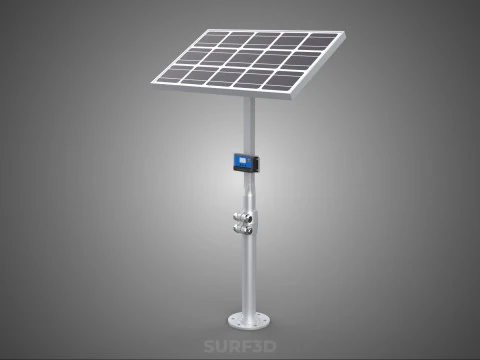
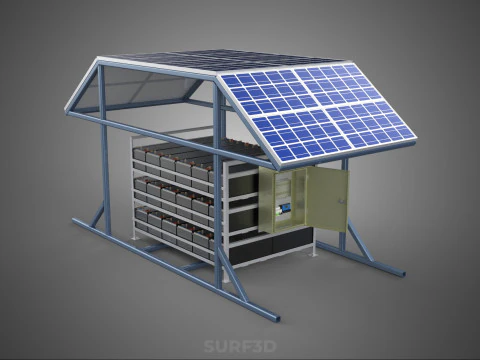
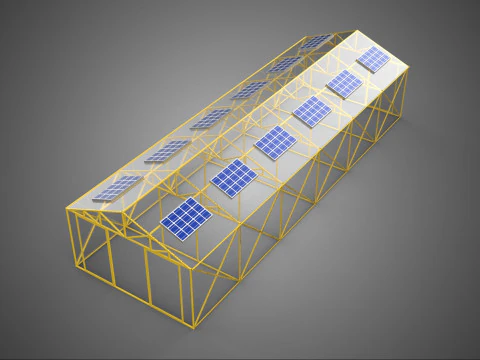
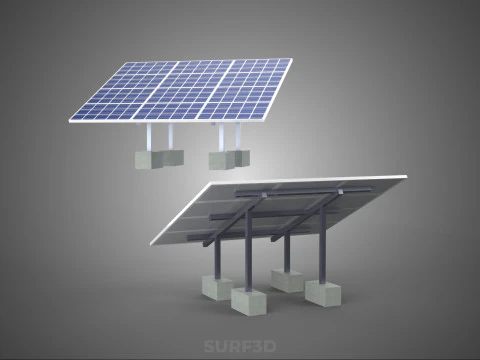
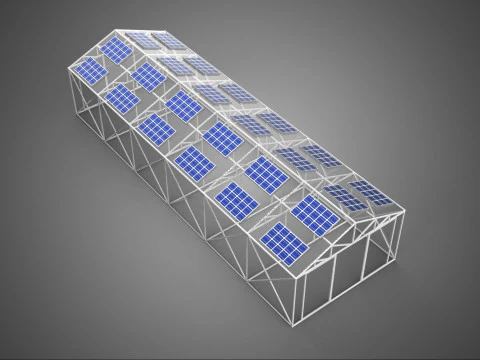
PANEL SOLAR FOTOVOLTAICO INVERNADERO INVERNADERO INVERNADERO INVERNADERO Modelo 3D



- Solicitar soporte de producto


- Formatos disponibles:
- ID de artículo:607201
- Fecha: 2025-10-24
- Polígonos:110872
- Vértices:141554
- Animados:No
- Texturas:No
- Articulados:No
- Materiales:Yes
- Low-poly:No
- Colección:No
- Mapas UVW:No
- Plugins Usados:No
- Listo para Imprimir:No
- 3D Scan:No
- Para adultos:No
- PBR:No
- AI Capacitación:No
- Geometría:Poly NURBS
- Desenvolver UVs:Unknown
- Vistas:620
Descripción
High-quality 3D assets at affordable prices — trusted by designers, engineers, and creators worldwide. Made with care to be versatile, accessible, and ready for your pipeline.
Included File Formats
This model is provided in 14 widely supported formats, ensuring maximum compatibility:
• - FBX (.fbx) – Standard format for most 3D software and pipelines
• - OBJ + MTL (.obj, .mtl) – Wavefront format, widely used and compatible
• - STL (.stl) – Exported mesh geometry; may be suitable for 3D printing with adjustments
• - STEP (.step, .stp) – CAD format using NURBS surfaces
• - IGES (.iges, .igs) – Common format for CAD/CAM and engineering workflows (NURBS)
• - SAT (.sat) – ACIS solid model format (NURBS)
• - DAE (.dae) – Collada format for 3D applications and animations
• - glTF (.glb) – Modern, lightweight format for web, AR, and real-time engines
• - 3DS (.3ds) – Legacy format with broad software support
• - 3ds Max (.max) – Provided for 3ds Max users
• - Blender (.blend) – Provided for Blender users
• - SketchUp (.skp) – Compatible with all SketchUp versions
• - AutoCAD (.dwg) – Suitable for technical and architectural workflows
• - Rhino (.3dm) – Provided for Rhino users
Model Info
• - All files are checked and tested for integrity and correct content
• - Geometry uses real-world scale; model resolution varies depending on the product (high or low poly)
• • - Scene setup and mesh structure may vary depending on model complexity
• - Rendered using Luxion KeyShot
• - Affordable price with professional detailing
Buy with confidence. Quality and compatibility guaranteed.
If you have any questions about the file formats, feel free to send us a message — we're happy to assist you!
Sincerely,
SURF3D
Trusted source for professional and affordable 3D models.
More Information About 3D Model :
**PHOTOVOLTAIC SOLAR PANEL ROOF TOP GREENHOUSE GLASSHOUSE HOTHOUSE**
A Photovoltaic (PV) Solar Panel Roof Top Greenhouse (also commonly referred to as a PV Integrated Greenhouse, Agri-PV Greenhouse, or BIPV-G, signifying Building-Integrated Photovoltaics for Greenhouses) is a specialized type of Controlled Environment Agriculture (CEA) structure designed to simultaneously facilitate agricultural production and generate electrical energy. These systems represent a synergistic application of renewable energy technology and agronomy, aiming for dual land-use efficiency.
### Nomenclature and Definition
The structures encompassed by this title—greenhouses, glasshouses, and hothouses—all function as transparent or semi-transparent enclosures used to maintain optimal climate conditions for crop cultivation, regulating temperature, humidity, and light availability. Integration occurs when the traditional glazing or roofing material is partially or fully replaced by photovoltaic modules capable of transmitting sufficient Photosynthetically Active Radiation (PAR) for plant growth while converting ambient sunlight into electricity.
### Technological Integration and Design Principles
PV integration into greenhouse roofs is primarily achieved through two methods:
1. **Aperture Integration (Opaque PV):** Standard, opaque PV panels cover a calculated fraction of the roof surface. The design optimizes the balance between energy generation (higher when more area is covered) and light transmission (higher when more area remains transparent). The spacing and orientation of the panels are crucial, often necessitating specialized mounting racks or thin frames to minimize structural shading and ensure uniform light distribution below.
2. **Semi-Transparent Integration (Translucent PV):** This method utilizes specialized photovoltaic materials, such as amorphous silicon (a-Si), thin-film cadmium telluride (CdTe), or emerging organic photovoltaics (OPV) and dye-sensitized solar cells (DSSC). These cells are fabricated to allow a significant portion of the solar spectrum, particularly in the range critical for photosynthesis (400–700 nm), to pass through, while absorbing other wavelengths (e.g., infrared and UV) for energy conversion.
The efficiency of a PV Integrated Greenhouse system is measured by two competing factors: the **Power Generation Efficiency** (PGE) and the **Photosynthesis Efficiency**, which is linked to the reduction in light reaching the crops (Shading Coefficient). Successful designs aim to maintain crop yield reduction below 10–20% compared to traditional glasshouses while providing substantial energy generation.
### Agricultural and Environmental Benefits
The integration of PV roofing provides several key advantages beyond simple energy generation:
* **Energy Self-Sufficiency:** The generated electricity can power the greenhouse’s internal systems, including heating, cooling, ventilation fans, irrigation pumps, climate control sensors, and LED supplemental lighting, drastically reducing operational costs and reliance on the public grid.
* **Thermal Regulation:** The PV panels act as shading elements during intense solar periods. By absorbing or reflecting excessive solar radiation, the panels can reduce the thermal load inside the greenhouse, lowering the demand for mechanical cooling and improving the growing environment, particularly in arid or tropical climates (a characteristic benefit often associated with hothouses).
* **Water Management:** In high-intensity systems, PV integration can contribute to water sustainability, as the reduced interior temperature minimizes evapotranspiration rates of the cultivated crops.
### Challenges and Optimization
PV integration introduces specific challenges that require careful architectural and agronomic planning:
* **Initial Capital Costs:** PV Integrated Greenhouses require significantly higher initial investment than traditional structures due to the specialized components and complex structural requirements (often classified as BIPV).
* **Light Spectrum Trade-offs:** Standard silicon PV panels primarily absorb visible light needed for photosynthesis. Semi-transparent technologies attempt to mitigate this, but achieving perfect spectral optimization (transmitting only PAR while absorbing non-PAR wavelengths) remains an area of ongoing research.
* **Maintenance and Cleaning:** Maintaining maximum power output requires routine cleaning of the exterior module surfaces, which can be more complex and costly than cleaning conventional greenhouse glazing, especially on large-scale installations.
* **Yield Stability:** Any shading factor, even beneficial ones, must be calibrated against the specific light requirements of the cultivated crop. High-light demanding crops (e.g., tomatoes, peppers) often require a lower panel density (higher aperture ratio), leading to reduced power generation potential compared to shade-tolerant crops (e.g., leafy greens, herbs).
PV Integrated Greenhouse technology represents a pivotal development in Agri-Photovoltaics (APV), merging sustainable energy generation with precision agriculture to maximize the productivity of arable land.
KEYWORDS: Agri-Photovoltaics, BIPV, Greenhouse, Solar Energy, Controlled Environment Agriculture, CEA, Glasshouse, Hothouse, Photovoltaic Integration, Semitransparent PV, Shading Coefficient, PAR, Photosynthesis, Crop Yield, Energy Self-sufficiency, Thin-film Solar, Amorphous Silicon, Dual Land Use, Renewable Energy, Thermal Regulation, Climate Control, Agronomy, Spectral Optimization, Power Generation Efficiency, Energy Management, Horticulture, Sustainable Agriculture, Cadmium Telluride, OPV, HORTIVOLTAICS.
¿Necesita más formatos?
Si precisa un formato distinto, por favor, abra una consulta de Soporte y solicítelo. Podemos convertir modelos 3D a: .stl, .c4d, .obj, .fbx, .ma/.mb, .3ds, .3dm, .dxf/.dwg, .max. .blend, .skp, .glb. Conversión de formato libreNosotros no convertimos escenas 3d y formatos como .step, .iges, .stp, .sldprt.!
Información de uso
PANEL SOLAR FOTOVOLTAICO INVERNADERO INVERNADERO INVERNADERO INVERNADERO - Puede usar este modelo 3D libre de regalías tanto para fines personales como comerciales, de acuerdo con la Licencia Básica o Extendida.La Licencia Básica cubre la mayoría de los casos de uso estándar, incluyendo anuncios digitales, proyectos de diseño y visualización, cuentas empresariales en redes sociales, aplicaciones nativas, aplicaciones web, videojuegos y productos finales físicos o digitales (tanto gratuitos como comerciales).
La Licencia Extendida incluye todos los derechos otorgados bajo la Licencia Básica, sin limitaciones de uso, y permite que el modelo 3D se use en un número ilimitado de proyectos comerciales bajo las condiciones de la Licencia Libre de Regalías.
Leer más
¿Garantizáis la Devolución de Dinero?
Si. Si compras un producto y encuentras errores de rendimiento o descripción, intentaremos solucionar el problema lo antes posible. Si no lo logramos, cancelaremos tu pedido y tu dinero será devuelto en 24h, desde que el producto fué descargado. Lea más condiciones aquíPalabras clave