


 English
 Español
 Deutsch
 日本語
日本語 Français
 한국의
한국의 Українська
 Italiano
 Nederlands
 Türkçe
 Português
 Bahasa Indonesia
 Русский
 中國
中國 हिंदी
हिंदी
















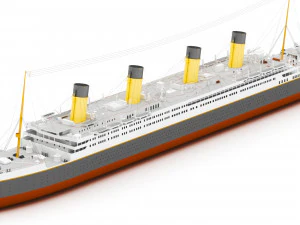
tytaniczny Modele 3D
Mamy 31 produkty/ów Bez opłat licencyjnych titanic Modele 3D. Kup lub pobierz bezpłatne modele 3D do swoich projektów CG, produkcji filmowych i wideo, animacji, wizualizacji, gier, VR/AR i innych. Możesz pobrać dowolny model 3D we wszystkich popularnych formatach 3D, w tym MAX, OBJ, FBX, 3DS, STL, C4D, BLEND, MAYA
 animedalmondoVehicle
 animedalmondoGame Accessories
- -10%
 unbreakableToys
  animedalmondoArchitecture






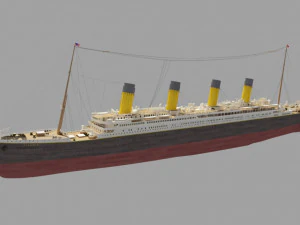
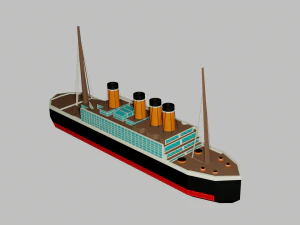
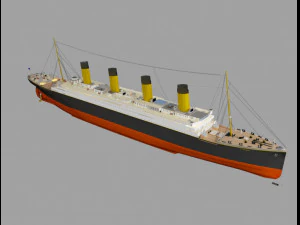



Popularne wyszukiwania Modele 3D:
Rzeźba Modele 3D Postacie Modele 3D Kuchnia Modele 3D Koń Modele 3D Architektoniczne Zewnątrz Modele 3D Telefon i Komórkowy Modele 3D Warzywo Modele 3D Biżuteria Modele 3D Zabawki Modele 3D Medyczny Modele 3D Śmigłowiec Modele 3D Ciężka Broń Modele 3D Ciężarówka Modele 3D Anatomia Modele 3DQ1: How historically accurate are Titanic 3D models on 3DExport?
Accuracy varies significantly. The most detailed models on the platform are built from archival blueprints, the original Harland & Wolff construction drawings, and reference from expeditions like the 2022 deep-sea scan conducted by Magellan Ltd — which produced the most complete digital mapping of the wreck to date. Models built from this reference capture details like the promenade deck chair configuration, funnel placement relative to the beam, and hull rivet pattern. Budget models often base proportions on James Cameron's 1997 film production design, which is itself historically researched but includes some dramatic liberties. For educational or documentary use, ask sellers specifically about their reference sources before purchasing.
Q2: What are the different versions of Titanic 3D models available?
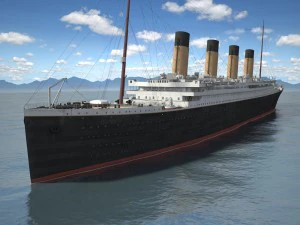
Three distinct types show up in the catalog. The intact "as-built" model shows the ship as she appeared during her 1912 maiden voyage — useful for historical visualization and animations depicting the voyage or sinking. The wreck model represents the current state of the debris field at 3,800 meters depth — two hull sections separated, heavily deteriorated, surrounded by debris. Cross-section models show interior deck layouts, useful for educational content about the ship's internal structure. Some sellers also offer animated sinking sequences as pre-built FBX timelines, which is useful if you need that specific visual without animating it yourself.
Q3: Can the Titanic 3D model be used in VR experiences?
Yes — the Titanic is one of the more popular subjects for VR historical experiences, and several high-quality models on 3DExport were built with this use case in mind. For VR, the main technical challenge is scale: the Titanic was 269 meters long and 53 meters tall. In a VR scene, you need LOD management to keep the frame rate above 72 fps (the baseline for comfortable VR). The solution is typically to build the scene in sections — the exterior hull as one LOD chain, the grand staircase interior as a separate detailed scene. Full-scale fully-detailed VR Titanic experiences use this sectional approach. A single monolithic model at full detail will not run at VR framerates on any current hardware.
Q4: What software is best for rendering the Titanic 3D model?
For photorealistic ocean and underwater scenes, Blender with Cycles or Houdini with Mantra/Karma are the standard choices. Ocean surface simulation uses Blender's Ocean modifier or Houdini's wave tank — either produces physically accurate water geometry. Underwater scenes for the wreck require participating media (volumetric fog/scatter nodes) to simulate the correct light attenuation at depth. In V-Ray for 3ds Max, the Fog environment shader handles this well. The main technical hurdle in any Titanic render is the sheer scale: rendering a 269-meter hull at camera-close distances requires careful tile sizing and sometimes scene splitting in render farms. Budget extra render time.