


 English
 Español
 Deutsch
 日本語
 Français
 한국의
 Українська
 Italiano
 Nederlands
 Türkçe
 Português
 Bahasa Indonesia
 Русский
 中國
 हिंदी

















rewolwer Modele 3D
Mamy 277 produkty/ów Bez opłat licencyjnych revolver Modele 3D. Kup lub pobierz bezpłatne modele 3D do swoich projektów CG, produkcji filmowych i wideo, animacji, wizualizacji, gier, VR/AR i innych. Możesz pobrać dowolny model 3D we wszystkich popularnych formatach 3D, w tym MAX, OBJ, FBX, 3DS, STL, C4D, BLEND, MAYA
- -30%
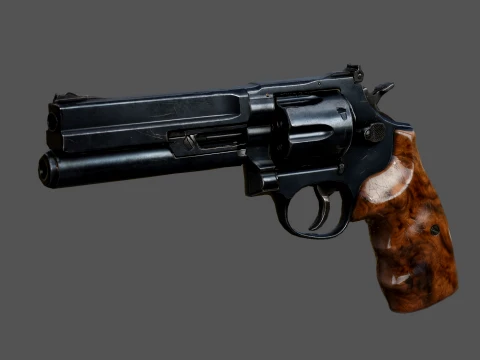 SanchiEspPistol
- -40%
 Avera3dPendants
- -40%
 Avera3dPendants
- -40%
 Avera3dPendants
- -40%
 Avera3dPendants
- -40%
 Avera3dPendants
- -40%
 Avera3dPendants
- -30%
 MakerLabToys
- -30%
 ARCHVANTASculpture
- -30%
 ARCHVANTASculpture
- -30%
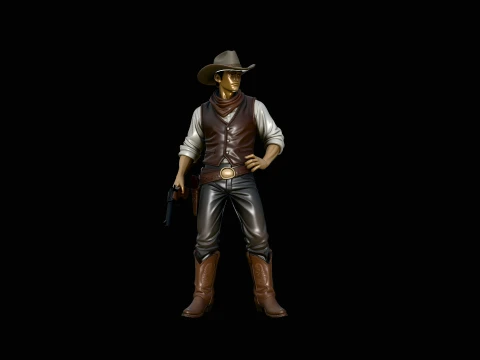 ARCHVANTASculpture
- -30%
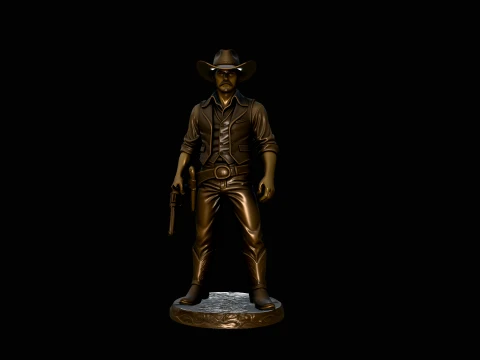 ARCHVANTASculpture
- -50%
 liaqatalinpukPistol
- -50%
 liaqatalinpukRifle
- -30%
 SiddiquePistol
- -50%
 3DVetrockOther
- -50%
 Stalker2025Recon






Popularne wyszukiwania Modele 3D:
Rzeźba Modele 3D Postacie Modele 3D Kuchnia Modele 3D Koń Modele 3D Architektoniczne Zewnątrz Modele 3D Telefon i Komórkowy Modele 3D Warzywo Modele 3D Biżuteria Modele 3D Zabawki Modele 3D Medyczny Modele 3D Śmigłowiec Modele 3D Ciężka Broń Modele 3D Ciężarówka Modele 3D Anatomia Modele 3DQ1: What historical revolver models are available on 3DExport?
The catalog covers the major historical and film-famous designs. Single-action Western revolvers: Colt Single Action Army (.45 caliber, 4.75 or 7.5 inch barrel variants), Remington 1875. Double-action late 19th century: Smith & Wesson Model 3 Schofield. 20th century service revolvers: Colt Police Positive, Smith & Wesson Model 10, Webley Mk VI (British service). Modern revolvers: Smith & Wesson 686, Ruger GP100, Colt Python. Film-famous designs often drive demand — the "Dirty Harry" S&W Model 29 in .44 Magnum, the Colt SAA as the archetypal Western sidearm. Fictional revolvers — oversized sci-fi variants or steampunk designs — represent a separate creative category.
Q2: What level of mechanical detail should a game-ready revolver model include?
For a hero weapon in a first-person shooter, the functional components need to be modeled as separate animated meshes: the cylinder (rotates on cocking or trigger pull), hammer (rotates back on cocking, snaps forward on firing), trigger (rotates on pull), and ejector rod (moves axially for cylinder unloading). The cylinder needs correctly modeled chambers — 6 chambers for most revolvers — with correct chamber mouth geometry. Loading gate geometry (for single-action) or crane/yoke assembly (for double-action swing-out cylinder) determines the reload animation structure. The internal mechanism doesn't need to be modeled; only the externally visible moving parts. Total triangle count for a hero revolver: 15,000–35,000 tris.
Q3: What are the trademark considerations for specific revolver models?
Real firearm designs are trademarked by their manufacturers. Smith & Wesson, Colt, Ruger, and other manufacturers have varying licensing policies for game and film use. Some manufacturers actively license their trademarks to games (S&W and Colt have licensing programs); others prefer not to have their products depicted in violent contexts. For commercial game development, using the exact model designation and manufacturer markings requires either a license or careful design modification. Changing the markings, barrel length, or grip design while retaining the overall mechanical configuration is a grey area. Many games use clearly-inspired designs without specific branding — "the revolver that looks like an SAA without the Colt rollmark" is standard practice.
Q4: How do I set up realistic metal materials for a revolver in Blender?
A blued steel revolver frame uses: Metallic 1.0, Roughness 0.15–0.25, Base Color near-black with a slight blue tint (RGB approximately 15, 15, 20). The bluing process creates a controlled oxide layer that gives the characteristic blue-black appearance. Add a subtle directional scratch pattern using a fine-grain noise texture feeding into the roughness channel — this simulates the draw marks from polishing before blueing. Wood grip panels need a completely separate material: non-metallic, Roughness 0.4–0.5, with a wood grain texture showing the actual grain direction. Nickel-plated variants use Metallic 1.0, Roughness 0.05–0.10, Base Color near-white (RGB 240, 238, 230) — significantly brighter and smoother than blued steel.