


 Español
 Deutsch
 日本語
日本語 Polska
 Français
 한국의
한국의 Українська
 Italiano
 Nederlands
 Türkçe
 Português
 Bahasa Indonesia
 Русский
 中國
中國 हिंदी
हिंदी
















Whale - Animals 3D Models
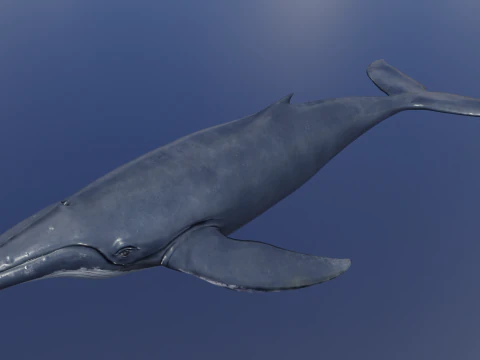
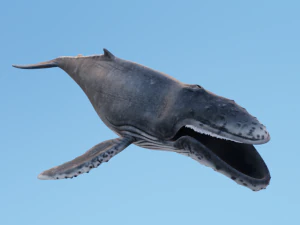
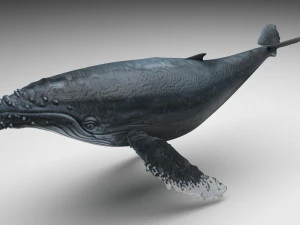
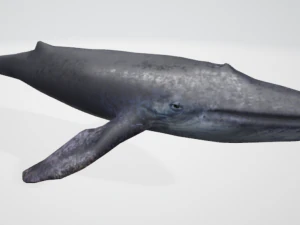
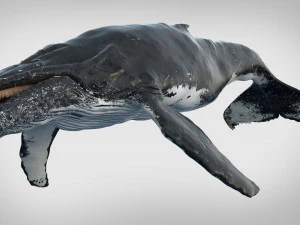
We have 48 item(s) Royalty free 3D Models. This category contains a wide choice of Whale 3D Models - Animals. Any 3D Whale model is available in .max, .obj, .c4d, .fbx, .dxf, .dwg, .stl, .iges, .3ds, .mb, .lwo, .3dm, .skp and .blend format. Some of them are ready for 3D Printing & Games. Also you will find a great number of models in Squid and Bear categories.

















Trending searches 3D Models:
Sculpture 3D Models Characters 3D Models Kitchen 3D Models Horse 3D Models Architectural Exteriors 3D Models Phone and Cell Phone 3D Models Vegetable 3D Models Jewellery 3D Models Toys 3D Models Medical 3D Models Helicopter 3D Models Heavy Weapon 3D Models Truck 3D Models Anatomy 3D ModelsHow do 2026 whale models handle "Large-Scale" rendering challenges?
Whales are among the largest subjects in 3D modeling, and in 2026, they require specialized texture management like UDIM (User Data Individual Mesh). This allows the vast surface area of a Blue Whale to maintain 8K resolution without visible tiling or blurring. Additionally, modern engines like Unreal Engine 5 use Nanite to handle the millions of polygons needed to model every skin fold and barnacle in 3D. To manage scale in the scene, our whale assets come with optimized "Atmospheric" shaders that simulate the "blue-shift" and light scattering that occurs over the length of a 30-meter animal underwater, ensuring the whale feels truly massive and distant.
Are the whale rigs optimized for "Breaching" and "Deep Diving"?
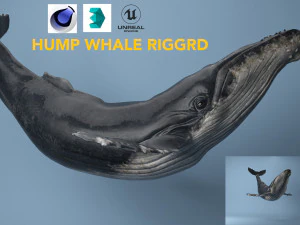
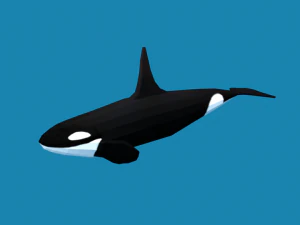
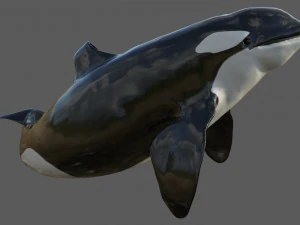
Yes, professional whale rigs in 2026 feature "Spine-Spline" controllers that allow for massive, powerful tail-fluke movements. This is essential for animating a "Breach" (jumping out of the water), where the rig must handle the transition from underwater resistance to gravity-based physics. The rigs also include "Blowhole" controls for breathing animations at the surface. For Orcas (Killer Whales), the rigs are more agile, supporting the sharp turns and high-speed hunting maneuvers they are known for. These technical setups are vital for creating high-impact cinematic trailers and realistic "Whale Watching" VR experiences that demand anatomical and behavioral accuracy.
What is the standard for "Whale Skin" and "Baleen" textures?
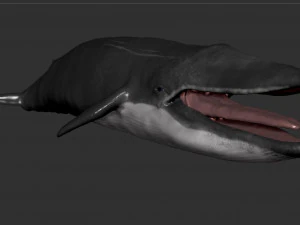
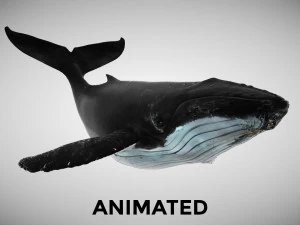
Whale skin has a unique, leathery texture often covered in "Diatom" film or scars. Our 2026 models use "Micro-Normal" maps to simulate this texture. For Baleen whales (like the Humpback), the "Baleen Plates" inside the mouth are modeled with "Alpha-Transparency" and high-detail geometry to show the hair-like fringe used for filtering krill. For Toothed whales (like the Sperm Whale), the teeth use a specialized "Ivory" shader. These internal mouth details are critical for "Feeding" animations, where the whale opens its massive jaws, a common hero shot in nature documentaries and cinematic underwater sequences.
How are "Barnacles" and "Remoras" integrated into the 3D model?
In 2026, barnacles are no longer just painted on the texture; they are often "Scattered" as individual 3D geometries across the whale's head and fins. This adds a layer of "Parallax" and shadow that is essential for photorealism. Many of our whale assets include "Modular Barnacle Packs" that you can toggle on or off. Some premium models even include rigged Remora fish (suckerfish) that are "parented" to the whale's body, allowing them to move slightly as the whale swims. This attention to the "Oceanic Ecosystem" on the animal's skin is what separates a professional 2026 asset from a basic 3D model.
Can I use whale 3D models for "Scientific Visualization" and VR?
Absolutely. Many of our whale models are built using photogrammetry data from real-world specimens to ensure scientific accuracy. In 2026, these are widely used in "Ocean Literacy" VR programs where users can swim alongside a life-sized Blue Whale. The models often include "Acoustic" locator points, allowing developers to attach realistic "Song" or "Echolocation" audio cues to the correct parts of the whale's anatomy (like the melon or the nasal sacs). This makes our 3D whales indispensable tools for marine biologists, museums, and educators who need to convey the awe-inspiring scale and complexity of these ocean giants in a digital format.