


 Español
 Deutsch
 日本語
日本語 Polska
 Français
 한국의
한국의 Українська
 Italiano
 Nederlands
 Türkçe
 Português
 Bahasa Indonesia
 Русский
 中國
中國 हिंदी
हिंदी
















Astronomy and Physics - Science 3D Print Models
We have 34 item(s) Royalty free 3D Models. This category contains a wide choice of Astronomy and Physics - 3D Printable Models. Any 3D Printable Astronomy and Physics model is available in .obj, .stl, .iges, .3dm, .skp, .wrl and .blend format. All of these 3d print models are ready for 3D Printing. Also you will find a great number of 3d models in Biology and Engineering categories.
- -40%
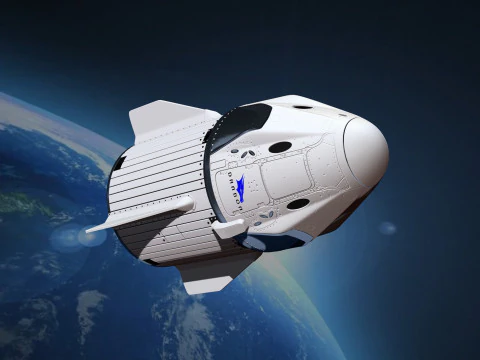 cody3dAstronomy and Physics
  jmdkamrulislam405Astronomy and Physics
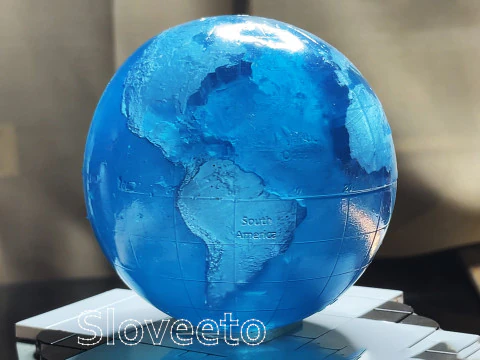 sloveetoAstronomy and Physics
 isak009Astronomy and Physics
 isak009Astronomy and Physics
 ChopMaxAstronomy and Physics
- -50%
 DavideContiAstronomy and Physics
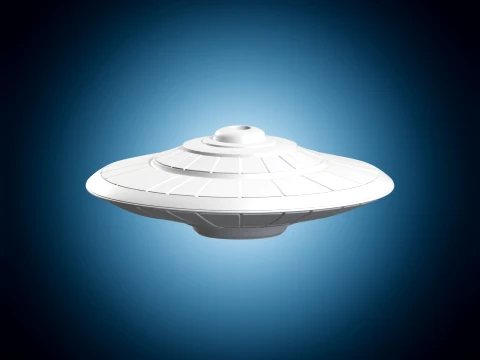











Trending searches 3D Models:
Sculpture 3D Models Characters 3D Models Kitchen 3D Models Horse 3D Models Architectural Exteriors 3D Models Phone and Cell Phone 3D Models Vegetable 3D Models Jewellery 3D Models Toys 3D Models Medical 3D Models Helicopter 3D Models Heavy Weapon 3D Models Truck 3D Models Anatomy 3D ModelsWhat cosmic and physical phenomena are represented in this category?
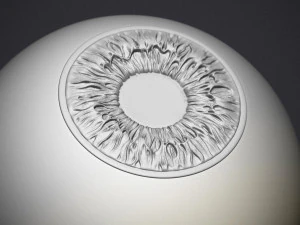
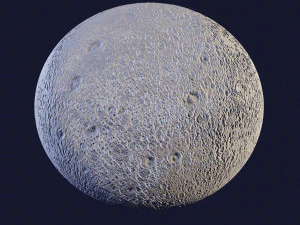
The 2026 Astronomy and Physics category covers the scale of the universe from the "Subatomic to the Galactic." We offer "Topo-Accurate" planetary models using NASA altimetry data, allowing you to print the cratered surface of the Moon or the canyons of Mars. For physics, we provide models of "Spacetime-Curvature" near black holes, atomic "Electron-Cloud" shells, and high-fidelity rocket engine assemblies. These models are designed for "Conceptual-Grounding," helping students grasp the massive scales of the solar system or the abstract movements of particles in a quantum field through physical, three-dimensional representation.
How is "Planetary-Topography" converted into a 3D printable mesh?
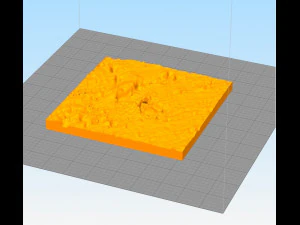
To create our 2026 planetary models, we use "Digital-Elevation-Models" (DEM) and convert them into high-resolution displacement maps. Because a planet’s mountains are tiny compared to its diameter, we provide "Exaggerated-Relief" versions. In these models, the height of mountains and depth of craters are scaled up by 5x or 10x so that they are physically "Feelable" when you touch the printed globe. This makes the models an incredible resource for the visually impaired and for classrooms where students need to understand the geological diversity of other worlds. The meshes are "Spherically-Optimized" to ensure they print with minimal supports when oriented correctly.
Are the rocket and spacecraft models historically and technically accurate?
Yes, the 2026 collection features "Technical-Heritage" models, including detailed cross-sections of the Saturn V, SpaceX Starship, and the James Webb Space Telescope. These are not just "Toys," but "Engineering-Instruction-Models" showing the internal fuel tanks, payload fairings, and engine bells. Each spacecraft is broken down into its "Stages," allowing you to simulate a launch and separation sequence. This level of technical detail is a primary requirement for aerospace students and space enthusiasts, providing a physical look at the complex engineering required to leave Earth’s atmosphere and operate in the harsh environment of space.
How are abstract physics concepts like "Magnetic-Fields" visualized in 3D?
Visualizing physics often requires showing "Vector-Fields" and "Waveforms." In 2026, we provide 3D printable models of magnetic field lines around a planet, the "Double-Slit" interference patterns of light, and the "Probability-Orbitals" of electrons in an atom. These are modeled as "Solid-Lattice-Structures," where the invisible forces are represented by printable paths. This allows a teacher to hold up an "Atom" and show exactly where an electron is likely to be, or a "Magnet" to show how its field wraps around a coil. These tactile physics models are essential for breaking down the complex, invisible math of the universe into understandable, physical objects.
What are the challenges of printing "Thin-Shell" planetary globes?
Printing a perfect sphere is a 3D printing challenge. In 2026, we solve this by providing "Split-Hemisphere" models. By printing the top and bottom of a planet separately as "Thin-Shells" and snapping them together, you get a beautiful, support-free surface and a hollow interior. This hollow space can be used to insert LEDs to create a "Glow-Planet" effect. For those who want to print a solid globe, we provide "Base-Integrated" versions that have a built-in stand to ensure stability. Using a "Variable-Layer-Height" in your slicer is recommended to ensure the top curve of the sphere is smooth and doesn't suffer from "Top-Step" artifacts, maintaining the planetary illusion.