


 Español
 Deutsch
 日本語
日本語 Polska
 Français
 한국의
한국의 Українська
 Italiano
 Nederlands
 Türkçe
 Português
 Bahasa Indonesia
 Русский
 中國
中國 हिंदी
हिंदी
















Parts - Industrial 3D Models
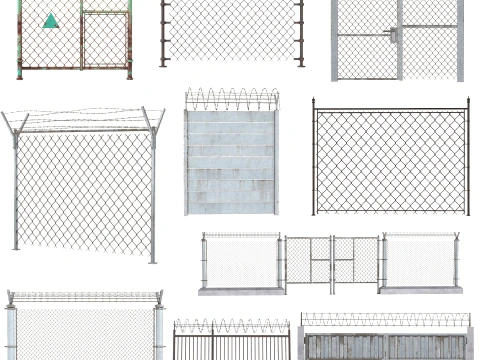
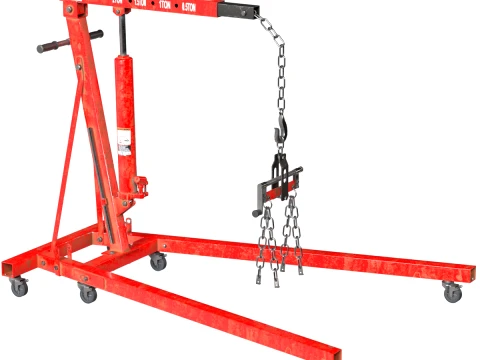
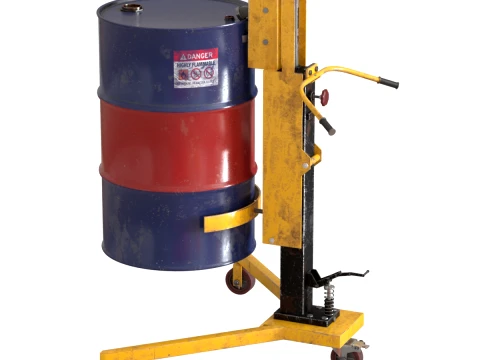
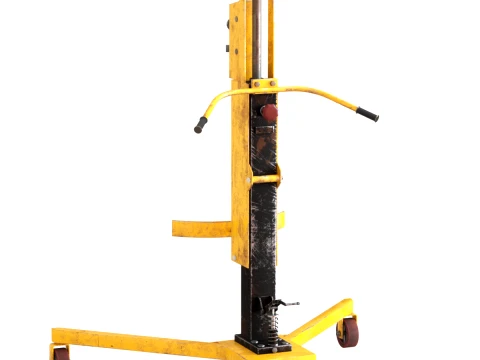
We have 2999 item(s) Royalty free 3D Models. This category contains a wide choice of Industrial parts 3D Models - Industrial. Any 3D Industrial parts model is available in .max, .obj, .c4d, .fbx, .dxf, .dwg, .stl, .iges, .3ds, .mb, .lwo, .3dm, .skp and .blend format. Some of them are ready for 3D Printing & Games. Also you will find a great number of models in Machines and Shipping containers categories.






Trending searches 3D Models:
Sculpture 3D Models Characters 3D Models Kitchen 3D Models Horse 3D Models Architectural Exteriors 3D Models Phone and Cell Phone 3D Models Vegetable 3D Models Jewellery 3D Models Toys 3D Models Medical 3D Models Helicopter 3D Models Heavy Weapon 3D Models Truck 3D Models Anatomy 3D ModelsWhat level of engineering precision is standard for industrial parts in 2026?
The Parts category is built on the principle of 1:1 mechanical accuracy. Whether it is a spur gear, a ball bearing, or a high-pressure valve, every component follows standard ISO or DIN specifications. In 2026, these parts are modeled with chamfered edges and realistic threading, ensuring that bolts and nuts physically fit into their corresponding holes. This technical depth is vital for mechanical engineers using 3D models for prototyping, as well as for artists creating exploded-view animations where the internal logic of a machine must be shown with total clarity.
How are the metallic and oily textures of mechanical parts simulated?
Realism in industrial parts comes from the interaction of metal and lubricants. Our 2026 models feature specialized PBR maps for anisotropy, capturing the brushed look of machined steel. We also include grease and oil masks in the roughness and metallic channels to simulate the protective coatings found on new parts or the lubricant buildup on used ones. This creates realistic light glints on the edges of gears and within the housings of bearings, providing a tangible, heavy feel that is essential for high-end industrial product photography and technical renders.
Are the parts modular for custom machine assembly?
Yes, the 2026 industrial parts library is designed for kitbashing and custom assembly. Components like hydraulic cylinders, pipes, and electrical connectors are built as modular units with standardized attachment points. This allows artists to quickly "build" custom machinery or complex pipework by snapping parts together. Each part retains its own UV layout and material ID, ensuring that a custom-built rig maintains a consistent visual standard. This modularity is a massive time-saver for concept artists and industrial designers working on bespoke mechanical solutions or sci-fi environments.
Do the parts include "Internal" geometry for cross-section renders?
Many of our high-end 2026 parts, such as engines and complex valves, are modeled with full internal volume. This means that if you perform a Boolean cut or a cross-section render, you will see the internal pistons, springs, and seals. This "Solid-Modeling" approach is crucial for educational videos and technical marketing where the goal is to explain how a mechanical component functions internally. The materials are also assigned to internal surfaces, ensuring that the cross-section looks as realistic and technically accurate as the exterior shell.
How are small parts optimized for large-scale industrial scenes?
For scenes requiring thousands of bolts, rivets, or small gears, we provide highly optimized "Instancing" assets. These models use baked normal maps to simulate complex geometry on a low-poly base, drastically reducing the memory footprint. In 2026, we also utilize modern GPU features like mesh shading to handle millions of these small components in real-time. This allows for the creation of massive industrial environments—like an oil refinery or a large-scale engine room—without compromising on the visual density or the performance of the 3D viewport.