


 Español
 Deutsch
 日本語
日本語 Polska
 Français
 한국의
한국의 Українська
 Italiano
 Nederlands
 Türkçe
 Português
 Bahasa Indonesia
 Русский
 中國
中國 हिंदी
हिंदी
















Anatomy - Characters 3D Models
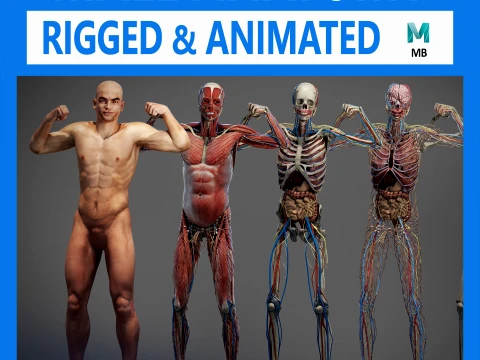
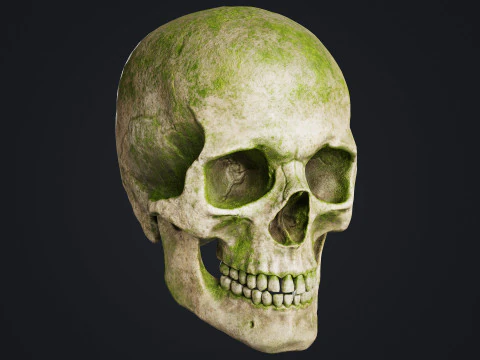
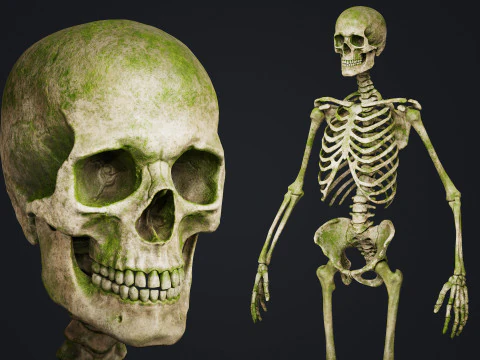
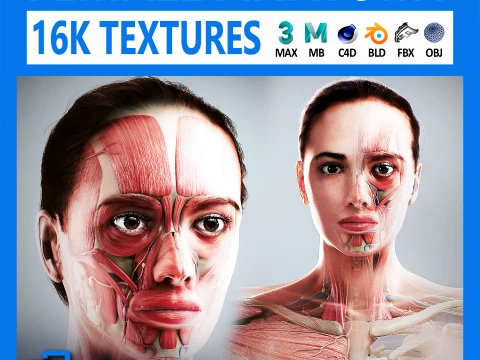
We have 1828 item(s) Royalty free 3D Models. This category contains a wide choice of Anatomy 3D Models - Characters. Any 3D Anatomy model is available in .max, .obj, .c4d, .fbx, .dxf, .dwg, .stl, .iges, .3ds, .mb, .lwo, .3dm, .skp and .blend format. Some of them are ready for 3D Printing & Games. Also you will find a great number of models in Robots and Cartoon categories.






























Trending searches 3D Models:
Sculpture 3D Models Characters 3D Models Kitchen 3D Models Horse 3D Models Architectural Exteriors 3D Models Phone and Cell Phone 3D Models Vegetable 3D Models Jewellery 3D Models Toys 3D Models Medical 3D Models Helicopter 3D Models Heavy Weapon 3D Models Truck 3D Models Anatomy 3D ModelsHow accurate are these anatomical 3D models for professional medical use in 2026?
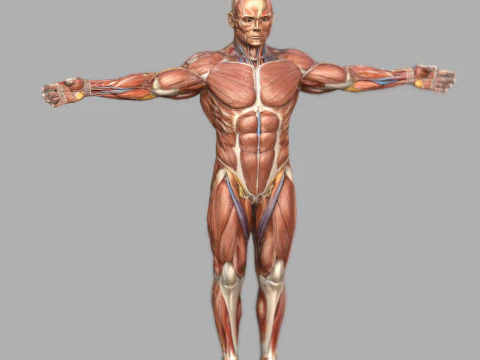
In 2026, professional anatomy assets are developed using high-resolution MRI and CT scan data, ensuring millimeter precision for every physiological structure. These are no longer just visual representations but "Digital Twins" of the human body, where every bone, muscle, artery, and organ follows correct medical geometry and topological placement. Such assets are critical for surgical planning, allowing doctors to study pathologies in 3D before a procedure, or for forensic reconstructions and anthropological studies. The high fidelity allows for virtual dissections in educational VR labs, providing students with an immersive experience previously only possible in real cadaver labs, but with the added benefit of repeatable study and microscopic tissue inspection.
Do the models support the isolation of specific systems for specialized medical visualizations?
Yes, professional 2026 anatomical assets feature a strict hierarchical structure and naming convention according to international medical terminology. This allows users to instantly isolate or hide any system, such as the skeletal, muscular, nervous, digestive, or cardiovascular systems. This is implemented through modular meshes, enabling a user to render only the circulatory system for angiological study or just the nerve plexuses for neurological research. This flexibility is indispensable for creating educational videos, interactive atlases, and pharmaceutical marketing presentations where focus must be placed on a specific area of the body without cluttering the scene, which also optimizes performance for render farms and real-time engines.
How is animation and biomechanics handled in these anatomical models?
Most top-tier 2026 anatomy models are equipped with complex physiological rigs. This means they are not static; they can demonstrate dynamic movement such as bicep contraction, joint rotation with ligament constraints, or rib cage expansion during respiration. Developers now utilize real-time muscle simulation systems that account for tissue volume and friction. This allows for incredibly realistic simulations for sports medicine, injury analysis, or the development of prosthetics and exoskeletons. Users can animate the model to see how muscle tension changes under specific loads, providing scientifically grounded visualizations of human activity for film, gaming, and research purposes.
<р2>What types of shaders and textures are used to simulate internal human tissues?To achieve photorealism of the human internal environment, 2026 models utilize specialized PBR materials with advanced Subsurface Scattering (SSS) settings. This makes organs appear wet and translucent, mimicking real-life biological properties. Textures include diffusion, normal, and specular maps at 8K resolution, capturing minute details like capillary networks, porous bone structures, or muscle fiber grain. Special attention is paid to "Cross-Section" shaders, which allow for real-time slicing through an organ to demonstrate internal structures—such as heart chambers or skin layers—without manual mesh modification, which is now the industry standard for high-end medical presentations and VR surgical trainers.
<р2>Are these models compatible with VR/AR platforms for interactive medical learning?Optimization for VR and AR is a top priority in 2026. Despite the massive detail, models come with multi-stage LOD (Level of Detail) sets, allowing them to run smoothly on standalone headsets like Meta Quest or Apple Vision Pro. They support interactive labels, collision proxies, and "grab" mechanics, allowing users to literally pick up an organ, rotate it, and inspect it from all sides in a virtual space. This creates an immersive learning environment where surgical errors do not cost lives but provide invaluable practical experience. The models are also frequently compatible with USDZ and GLB formats for instant AR viewing via a smartphone browser without specialized apps.