


 Español
 Deutsch
 日本語
日本語 Polska
 Français
 한국의
한국의 Українська
 Italiano
 Nederlands
 Türkçe
 Português
 Bahasa Indonesia
 Русский
 中國
中國 हिंदी
हिंदी
















Robotics - Hobby and DIY 3D Print Models
We have 74 item(s) Royalty free 3D Models. This category contains a wide choice of Robotics - 3D Printable Models. Any 3D Printable Robotics model is available in .obj, .stl, .iges, .3dm, .skp, .wrl and .blend format. All of these 3d print models are ready for 3D Printing. Also you will find a great number of 3d models in Mechanical parts and Electronics categories.
- -30%
 MakerLabRobotics
  kwokchuanRobotics
 MYSHOPKIT.FRRobotics
 haller3dRobotics
- -50%
 engecraftmanRobotics
  yalcin.cnRobotics
 3dprintmodelstoreRobotics





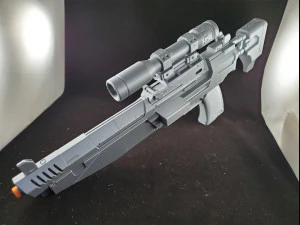
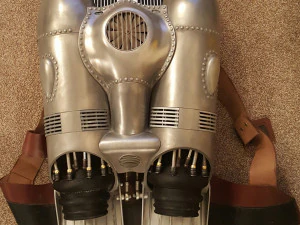
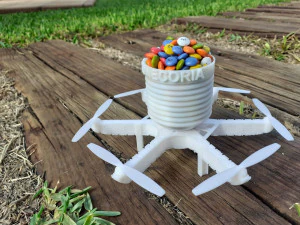
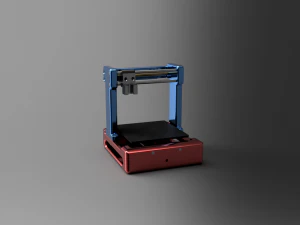


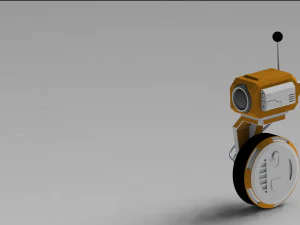
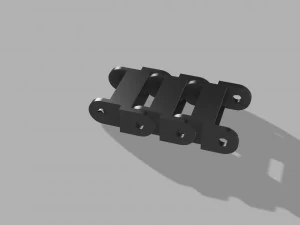

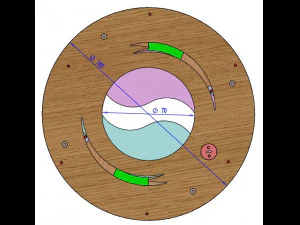


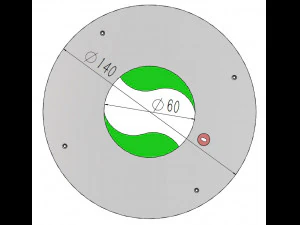





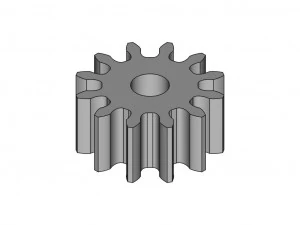

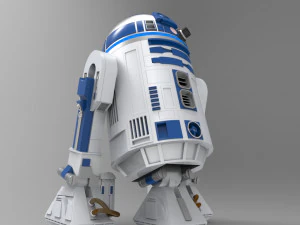
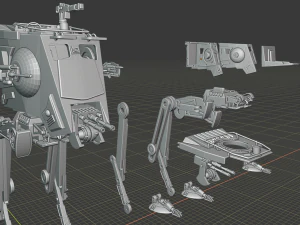






Trending searches 3D Models:
Sculpture 3D Models Characters 3D Models Kitchen 3D Models Horse 3D Models Architectural Exteriors 3D Models Phone and Cell Phone 3D Models Vegetable 3D Models Jewellery 3D Models Toys 3D Models Medical 3D Models Helicopter 3D Models Heavy Weapon 3D Models Truck 3D Models Anatomy 3D ModelsWhat types of robotic platforms are available in the 2026 collection?
The Robotics category is a comprehensive library of kinetic engineering, ranging from multi-axis robotic arms and bipedal walkers to complex hexapod chassis and autonomous rover bases. In 2026, we emphasize "Functional-Kinematics," ensuring that every limb and joint is modeled with the correct range of motion and internal clearances. These models are essential for students, researchers, and hobbyists who want to explore artificial intelligence and automation without the high cost of industrial hardware. Each asset serves as a robust physical shell for your electronics, providing the structural integrity needed to house powerful motors and delicate sensors in a cohesive, professional-looking robotic unit.
How are these models optimized for "Servo-and-Motor" integration?
Precision mounting is the backbone of robotics, and our 2026 models feature "Universal-Standard-Mounts" for popular actuators like MG996R servos, NEMA stepper motors, and brushless DC motors. We include internal "Wire-Routing-Channels" to keep your builds clean and prevent cable snagging during movement. The motor housings are designed with "Heat-Sync-Ventilation" to allow for airflow, extending the life of your electronics. This technical preparation ensures that your 3D printed robot isn't just a static sculpture, but a high-performance machine where the plastic components and electronic hardware work in perfect mechanical harmony, reducing assembly time and technical frustration.
Are the robotic arm models capable of "High-Precision" movement?
Yes, our robotic arms are designed using "Backlash-Reduction-Geometry." In 2026, we utilize cycloidal drives and planetary gearbox designs that can be 3D printed to provide high torque and minimal wobble. These models include "Bearing-Retainer-Slots" for standard ball bearings, ensuring smooth, low-friction rotation at every axis. This "Engineering-Grade" approach allows hobbyists to build arms capable of delicate tasks like drawing, sorting, or light assembly. By focusing on mechanical rigidity and low-tolerance fitments, these models provide a platform for advanced programming and precision control that rivals entry-level commercial desktop robotic systems.
Can I find "Sensor-Housings" for LiDAR and Camera systems?
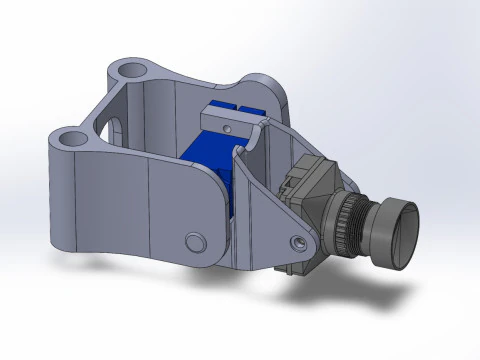
Absolutely. A robot’s ability to perceive its environment is critical, so we provide specialized "Perception-Mounts" for ultrasonic sensors, LiDAR units, and stereoscopic cameras. These 2026 models feature "Vibration-Dampening-Grommets" to ensure that sensor data remains stable even when the robot is moving over rough terrain. The mounts are often adjustable, allowing you to fine-tune the "Field-of-View" for your specific navigation algorithms. This modularity is a primary requirement for developers working on autonomous SLAM (Simultaneous Localization and Mapping) projects, providing a secure and optimized home for the "Eyes-and-Ears" of your DIY robotic creation.
What materials are best for "High-Stress" robotic components?
For structural frames and high-torque gears, we recommend "Carbon-Fiber-Reinforced-Nylon" or "PC-PBT" blends in 2026. These materials offer the necessary stiffness to prevent limb flexing under load and high impact resistance for mobile robots. For "Soft-Robotics" or grippers, "Flexible-TPU" is the standard, allowing for compliant surfaces that can pick up fragile objects. Many makers use a "Hybrid-Material" approach, printing the rigid skeleton in a tough polymer and the outer protective fairings in lightweight PLA. This strategic material selection ensures that your robot is durable, efficient, and capable of performing its designated tasks over hundreds of operational hours.