


 Español
 Deutsch
 日本語
日本語 Polska
 Français
 한국의
한국의 Українська
 Italiano
 Nederlands
 Türkçe
 Português
 Bahasa Indonesia
 Русский
 中國
中國 हिंदी
हिंदी
















Other - Science 3D Print Models
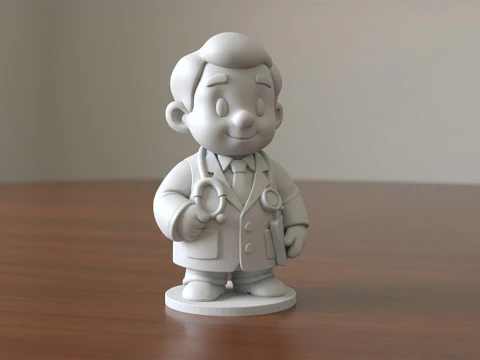
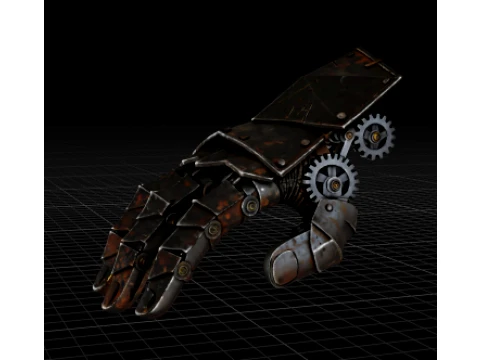
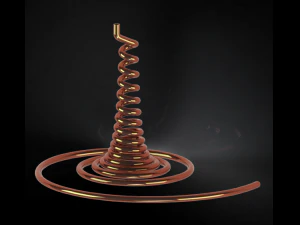
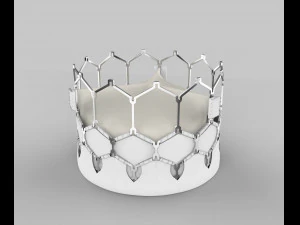
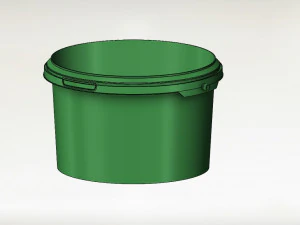
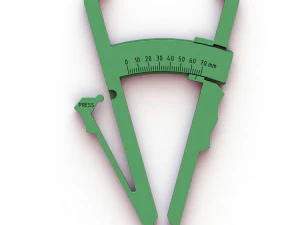
We have 56 item(s) Royalty free 3D Models. This category contains a wide choice of Other Science - 3D Printable Models. Any 3D Printable Other Science model is available in .obj, .stl, .iges, .3dm, .skp, .wrl and .blend format. All of these 3d print models are ready for 3D Printing. Also you will find a great number of 3d models in Math and Astronomy and Physics categories.
- -50%
 SCULP3DMODELOther
 - -50%
 DavideContiOther
 - -50%
 DavideContiOther
 - -50%
 DavideContiOther
 - -30%
 3DlettersandmoreOther
















Trending searches 3D Models:
Sculpture 3D Models Characters 3D Models Kitchen 3D Models Horse 3D Models Architectural Exteriors 3D Models Phone and Cell Phone 3D Models Vegetable 3D Models Jewellery 3D Models Toys 3D Models Medical 3D Models Helicopter 3D Models Heavy Weapon 3D Models Truck 3D Models Anatomy 3D ModelsWhat variety of specialized scientific objects is available in the Other category?
This section acts as a versatile repository for scientific assets that fall outside traditional biological or engineering classifications. It includes high-fidelity 3D printable models of vintage laboratory gear, such as brass microscopes and astrolabes, alongside modern research tools like centrifuge rotors, test tube racks, and custom sensor housings. In 2026, we focus on providing "Functional-Utility" models, which are often used by researchers to prototype custom lab hardware or by museums to create tactile replicas of rare artifacts. These models are meticulously checked for wall thickness and manifold geometry to ensure they print successfully on both FDM and resin systems, providing a bridge between historical science and modern fabrication.
Are these models optimized for functional use in a laboratory setting?
While many models are educational, the 2026 collection includes "Lab-Ready" designs intended for organizational or ergonomic utility. This includes modular pipette holders, custom slide containers, and cable management systems for complex electronic arrays. These models are designed with "Tolerances-in-Mind," meaning that parts intended to fit together—such as a lid and a box—have the necessary mechanical clearance to account for 3D printing material shrinkage. This technical preparation allows scientists and students to print their own laboratory accessories, saving costs and allowing for the rapid customization of workspace equipment to fit specific experimental needs without waiting for commercial shipments.
How is the printability of delicate historical scientific instruments handled?
For complex historical models like sextants or old-world scales, we utilize a "Modular-Assembly" approach. Instead of a single, unprintable block, these 2026 models are broken down into logical components that can be printed flat and assembled afterward. This significantly reduces the need for messy supports and improves the surface finish of the final print. Each file includes detailed "Print-Guidance" metadata, suggesting the best orientation for strength and detail. This ensures that even the most intricate scientific instrument can be reproduced with a high degree of fidelity, making these models perfect for classroom demonstrations or collectors of scientific history.
Can these 3D print models be scaled for different educational purposes?
Yes, all models in the Other category are provided in high-resolution STL or OBJ formats, which allow for "Artifact-Preservation" scaling. You can print a miniature version of a large laboratory apparatus for a desk display or scale up a small component to show internal mechanical details to a large classroom. In 2026, we ensure that the "Watertight-Mesh" remains intact during scaling, preventing the introduction of holes or artifacts. This flexibility makes the models ideal for diverse audiences, from students who need a tactile overview to specialized researchers who require a specific size for their experimental prototypes.
What materials are recommended for printing these scientific assets?
For functional laboratory tools, we recommend using high-durability filaments like PETG or ASA, which offer chemical resistance and thermal stability. However, for "Visual-Education" models like historical instruments, standard PLA or high-detail Tough Resin is often sufficient. In 2026, our models include "Material-Compatibility" tags, suggesting which assets might require UV-resistant or food-safe materials if they are to be used in contact with chemicals or outdoors. By providing this technical context, we help users choose the right material for the job, ensuring that the final printed scientific object is not only visually accurate but also structurally fit for its intended environment.