


 Español
 Deutsch
 日本語
日本語 Polska
 Français
 한국의
한국의 Українська
 Italiano
 Nederlands
 Türkçe
 Português
 Bahasa Indonesia
 Русский
 中國
中國 हिंदी
हिंदी
















Mathematical art - Art 3D Print Models
We have 319 item(s) Royalty free 3D Models. This category contains a wide choice of Mathematical art - 3D Printable Models. Any 3D Printable Mathematical art model is available in .obj, .stl, .iges, .3dm, .skp, .wrl and .blend format. All of these 3d print models are ready for 3D Printing. Also you will find a great number of 3d models in Coins and Badges and Scans and replicasther categories.
- -50%
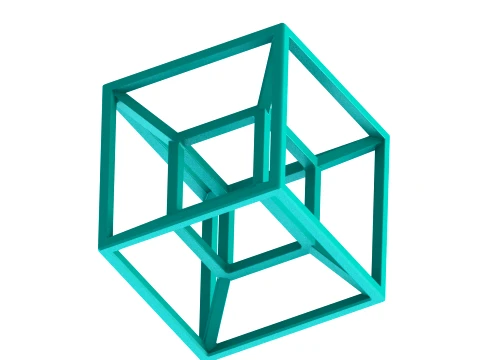 serhiishmMathematical art
 - -50%
 surajkiroula24Mathematical art
 - -50%
 briarenaMathematical art
 - -50%
 briarenaMathematical art
 - -50%
 jhonnvilla15Mathematical art
 - -50%
 MRAnyCADMathematical art
 - -50%
 MRAnyCADMathematical art
 - -50%
 MRAnyCADMathematical art
 - -50%
 MRAnyCADMathematical art
 - -50%
 MRAnyCADMathematical art
 - -50%
 MRAnyCADMathematical art


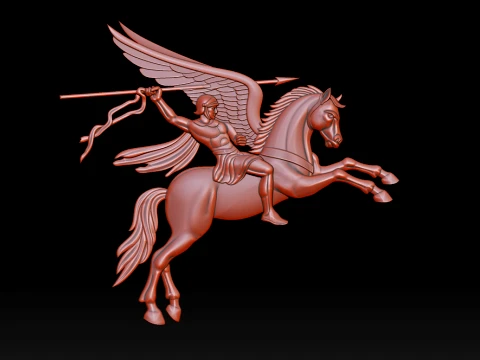

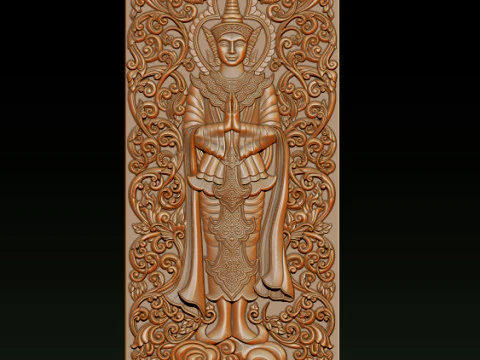
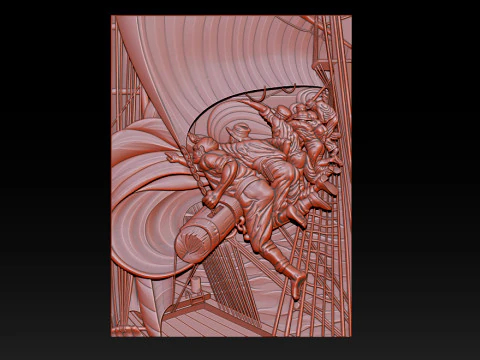

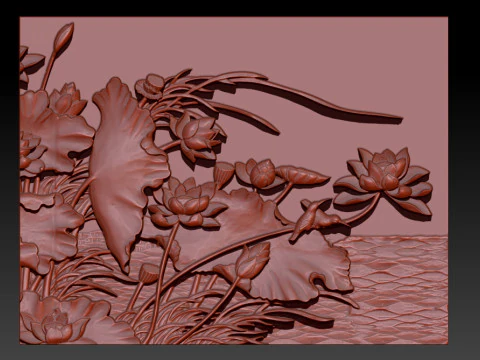










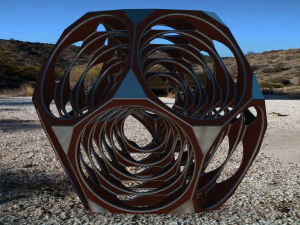






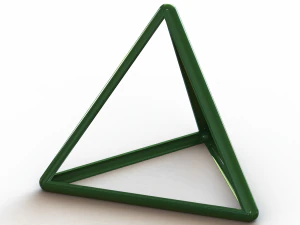






Trending searches 3D Models:
Sculpture 3D Models Characters 3D Models Kitchen 3D Models Horse 3D Models Architectural Exteriors 3D Models Phone and Cell Phone 3D Models Vegetable 3D Models Jewellery 3D Models Toys 3D Models Medical 3D Models Helicopter 3D Models Heavy Weapon 3D Models Truck 3D Models Anatomy 3D ModelsWhat is "Mathematical-Art" in the context of 3D printing?
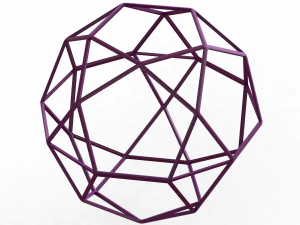
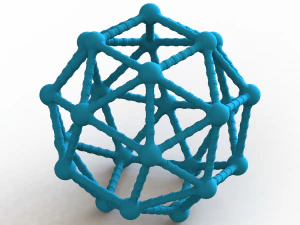
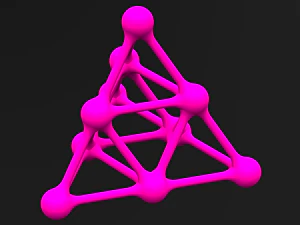
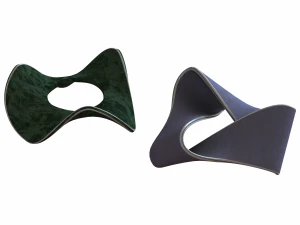
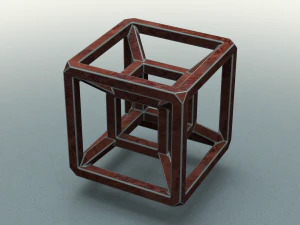
Mathematical art is the physical manifestation of abstract equations and geometric theorems. In 2026, this category includes stunning 3D representations of fractals like the Mandelbulb, complex topological surfaces like Klein bottles and Mobius strips, and projections of higher-dimensional shapes like tesseracts. These models represent a perfect marriage of logic and beauty, turning cold numbers into intricate, organic-looking sculptures. 3D printing is the only medium capable of producing these shapes because their internal complexity and self-intersecting surfaces are impossible to manufacture using traditional subtractive methods like carving or milling, providing a unique look into the beauty of the universe's underlying code.
How do "Fractal-Models" handle the extreme detail of 2026?
Fractals are recursive patterns that are self-similar at every scale, which presents a significant challenge for 3D printing. Our 2026 models are designed with "Fixed-Iteration-Limits" to ensure that the geometry remains printable while still looking infinitely complex. These models often feature millions of tiny spikes, holes, and branches that require a very high resolution to resolve. We recommend using a resin (SLA) printer for these items to capture the "Micro-Complexity" that makes fractals so fascinating. The result is a sculpture that seems to change every time you look closer, providing a tactile experience of the infinite that serves as a profound piece of intellectual art.
Are "Topological-Surfaces" like Klein bottles printable?
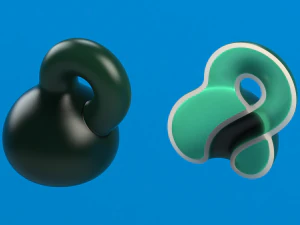
Yes, we provide several clever interpretations of classic topological curiosities. A true Klein bottle is a surface with only one side that exists in four dimensions; our 3D models use "Self-Intersecting-Geometry" to represent this in our three-dimensional reality. These models are printed with hollow interiors and thin walls, allowing you to trace the surface with your finger from the "outside" to the "inside" without ever crossing an edge. In 2026, these pieces are popular in both the scientific community and the art world, serving as beautiful educational models and striking abstract sculptures that challenge our understanding of space and orientation.
Can I use these models for STEM and geometry education?
Mathematical art is a primary requirement for modern STEM education. In 2026, teachers use these 3D printed models to help students visualize complex calculus and geometry concepts. Seeing and touching a "Saddle-Point" or a "Toroidal-Knot" makes abstract concepts much more tangible and easier to understand. We provide models for various polyhedra, conic sections, and algebraic surfaces that are perfect for the classroom. These models are durable, affordable, and provide a much more engaging experience than 2D diagrams on a screen or in a textbook, helping the next generation of mathematicians and artists find the beauty in the numbers.
What are the best printer settings for complex geometric art?
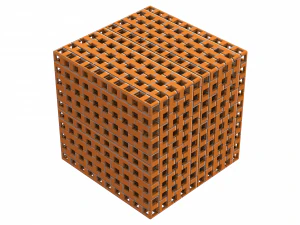
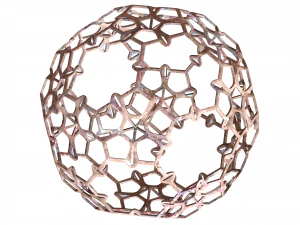
For mathematical art with fine lattices and thin structures, we recommend using a small 0.2mm nozzle on FDM printers or a high-resolution 8K resin printer. In 2026, "Slow-and-Steady" is the rule for these files. Reducing print speed by 50% can significantly improve the success rate for fragile fractal branches. We also suggest using "Tree-Supports" to minimize the contact points on the delicate surfaces of the model, making the cleanup process much easier. For a professional look, printing in a single, bold color like deep blue or stark white allows the shadows to define the complex geometry, making the mathematical patterns the clear star of the show.