


 Español
 Deutsch
 日本語
日本語 Polska
 Français
 한국의
한국의 Українська
 Italiano
 Nederlands
 Türkçe
 Português
 Bahasa Indonesia
 Русский
 中國
中國 हिंदी
हिंदी
















Engineering - Science 3D Print Models
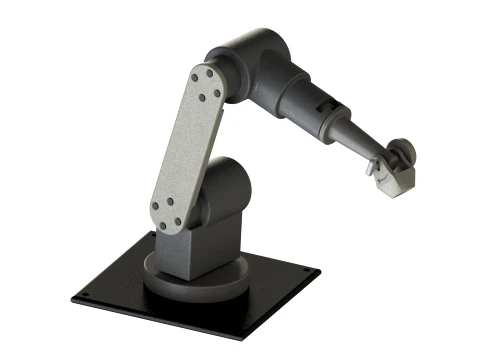
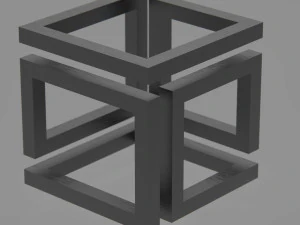
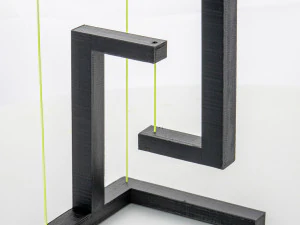
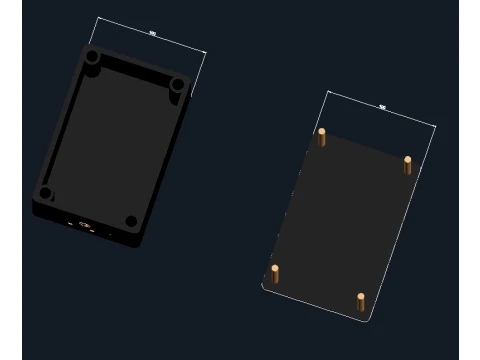
We have 903 item(s) Royalty free 3D Models. This category contains a wide choice of Engineering - 3D Printable Models. Any 3D Printable Engineering model is available in .obj, .stl, .iges, .3dm, .skp, .wrl and .blend format. All of these 3d print models are ready for 3D Printing. Also you will find a great number of 3d models in Biology and Math categories.
- -50%
 serhiishmEngineering
 - -50%
 smtcnyrt2924Engineering
 - -50%
 RoboticpartsEngineering
 - -50%
 andrey.deal.2023Engineering
 - -50%
 cody3dEngineering
 - -50%
 cody3dEngineering
 - -50%
 cody3dEngineering































Trending searches 3D Models:
Sculpture 3D Models Characters 3D Models Kitchen 3D Models Horse 3D Models Architectural Exteriors 3D Models Phone and Cell Phone 3D Models Vegetable 3D Models Jewellery 3D Models Toys 3D Models Medical 3D Models Helicopter 3D Models Heavy Weapon 3D Models Truck 3D Models Anatomy 3D ModelsWhat types of functional mechanical systems are included in the Engineering category?
The 2026 Engineering collection is a robust library of mechanical ingenuity, featuring everything from intricate planetary gear sets and differential assemblies to cross-sectional models of jet turbines and internal combustion engines. We also provide structural engineering models like bridge trusses and "Voronoi-Optimized" beams for load-testing demonstrations. Each model is designed with "Mechanical-Logic" as a priority, ensuring that shafts, bearings, and interlocking teeth are sized correctly for physical movement. These assets are vital for student engineers who need to understand how complex assemblies fit and move together, providing a hands-on experience that complements CAD software training.
Are the engineering models "Print-in-Place" or require assembly?
We offer both "Print-in-Place" (PIP) and "Modular-Assembly" options to suit different 3D printing skill levels. PIP models are designed with specific internal clearances that allow gears and joints to move immediately after printing, without any assembly. In 2026, these are highly popular for demonstrating kinematic chains. For more complex "Large-Scale" engines or machines, we provide modular kits with "Interlocking-Fasteners." These kits allow users to print individual components in different colors and materials, which is excellent for educational purposes to distinguish between the intake, compression, and exhaust stages of a motor, or simply to make the assembly process a teaching moment in itself.
How do these models handle "Mechanical-Tolerances" for moving parts?
Engineering models for 2026 are built with "Dynamic-Clearance-Offsets." Typically, we provide a 0.2mm to 0.4mm gap between moving parts, which is the "Sweet-Spot" for most standard FDM printers to prevent parts from fusing together while maintaining a tight, professional fit. For those with high-precision resin printers, we also provide "Tight-Tolerance" versions. This technical attention to detail ensures that the gears don't wobble and the pistons slide smoothly, providing a physical model that behaves like its real-world industrial counterpart. This is essential for "Proof-of-Concept" prototyping where the mechanical feel of the assembly is just as important as its visual appearance.
Can these models be used for structural load and stress testing?
Yes, many of our 2026 structural engineering models are designed as "Benchmark-Assets" for testing material strength. We provide models of various infill patterns and truss designs that students can print and physically break under a press to observe "Failure-Points" and "Stress-Distribution." These models are often used in "Bridge-Building" competitions or materials science labs. By printing and testing these engineering geometries, users can gain a practical understanding of how different structural shapes—like I-beams vs. hollow tubes—respond to tension and compression, turning a theoretical classroom lecture into a visceral and memorable engineering experiment.
What post-processing is recommended for functional mechanical prints?
For engineering prints intended for repeated motion, we recommend "Surface-Polishing" and lubrication. In 2026, we suggest using fine-grit sandpaper on mating surfaces followed by a PTFE-based dry lubricant to ensure long-term mechanical reliability. For resin prints, ensuring a full UV cure is vital to prevent the parts from being too brittle under mechanical stress. We also recommend "Heat-Annealing" for parts printed in polymers like PLA+ or PETG to increase their heat resistance and structural rigidity. These extra steps ensure that your 3D printed engine or gearbox can actually be "Run" by a small electric motor for extended periods without melting or failing.