
 Español
 Deutsch
 日本語
日本語 Français
 한국의
한국의 Italiano
 Nederlands
 Türkçe
 Português
















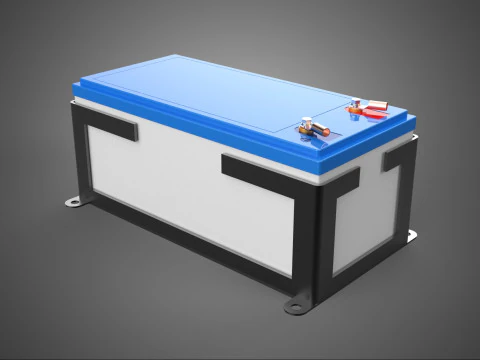
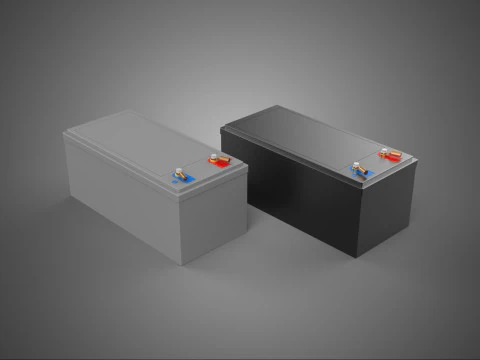
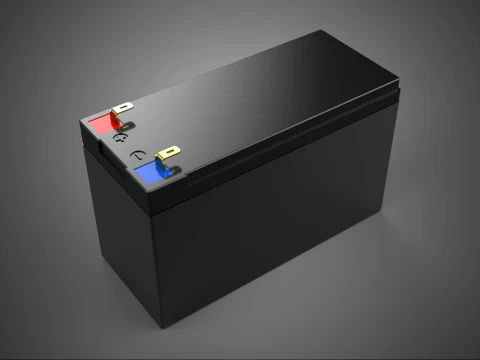
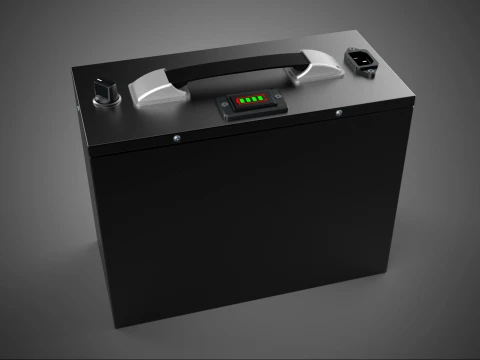
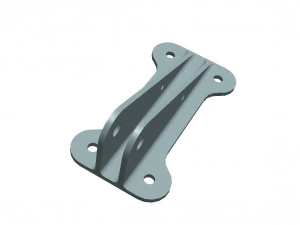
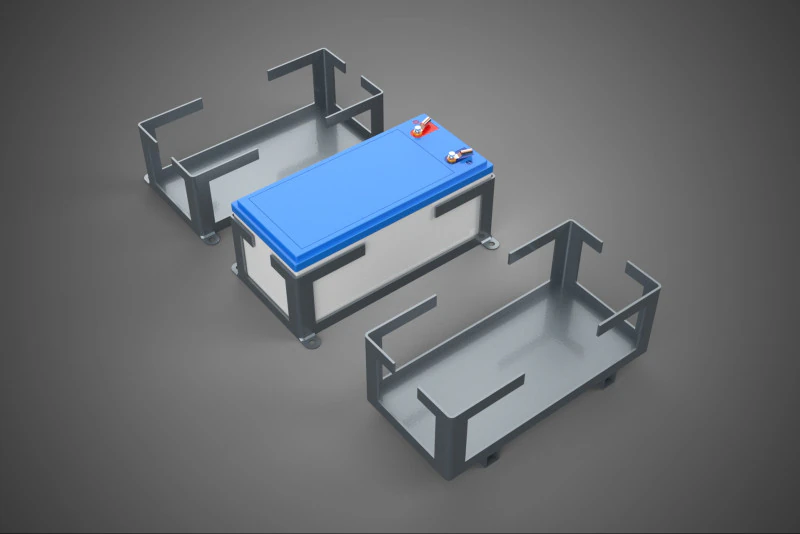
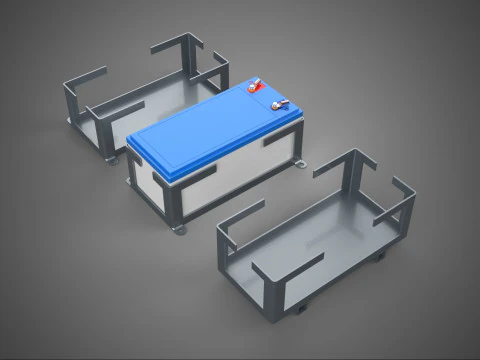
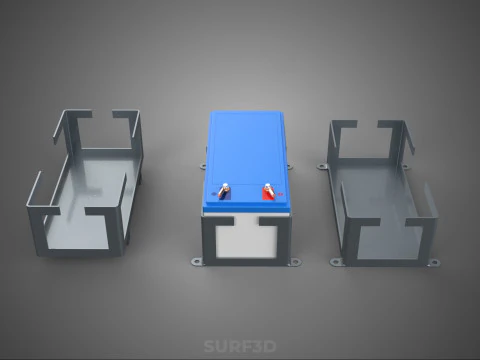
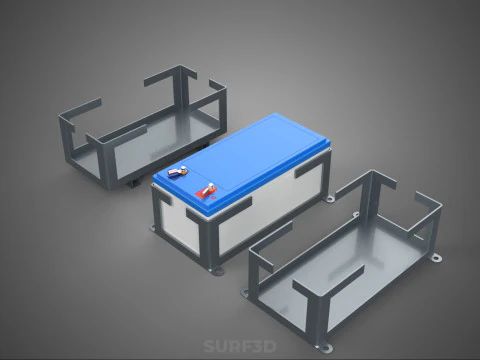
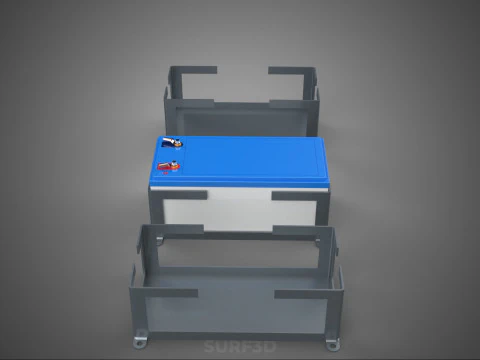
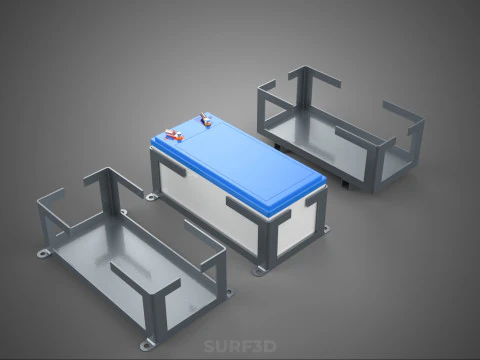
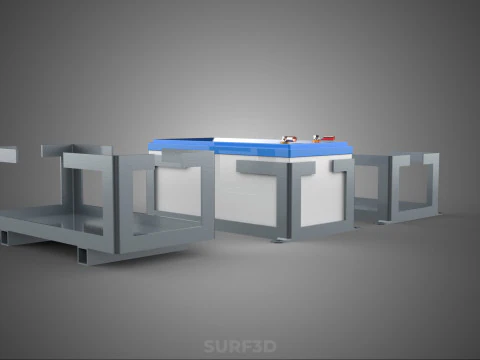
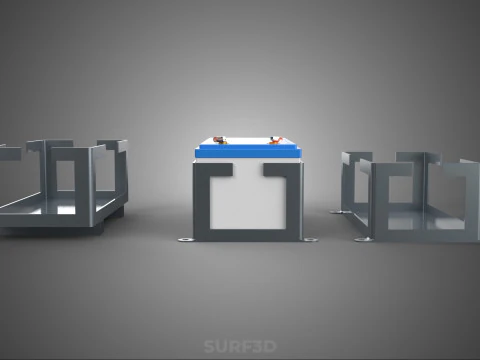
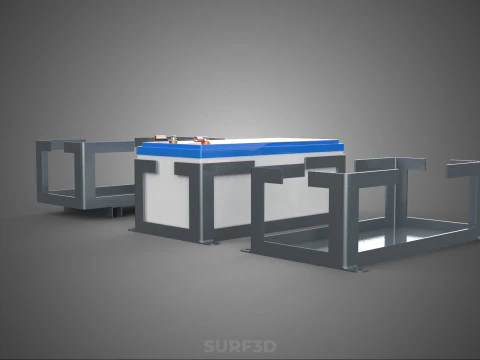
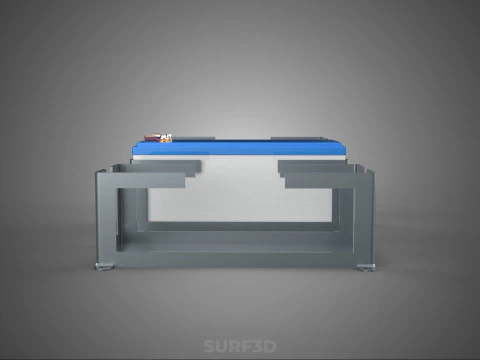
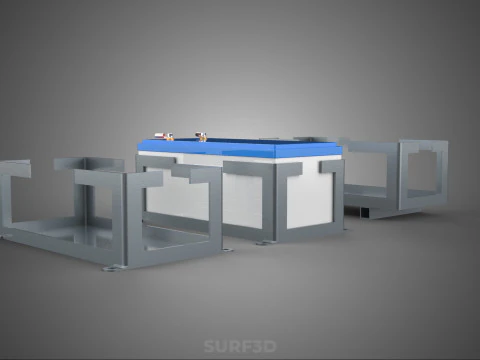
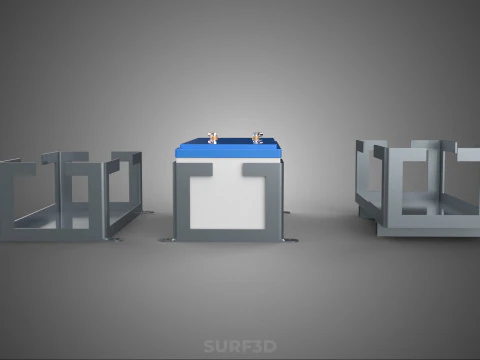
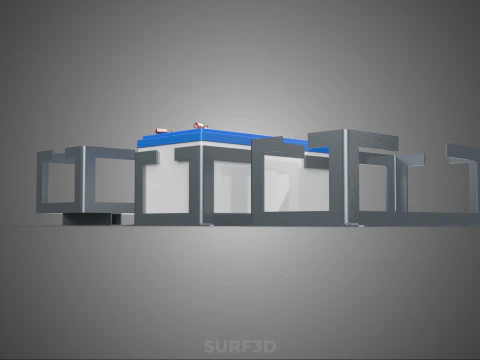
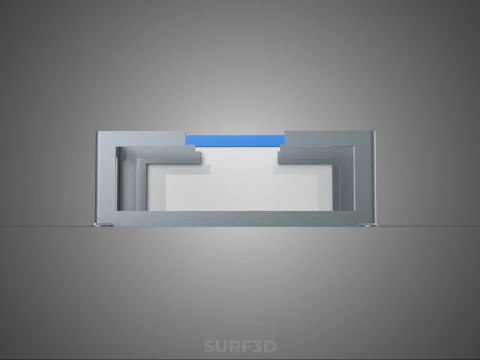
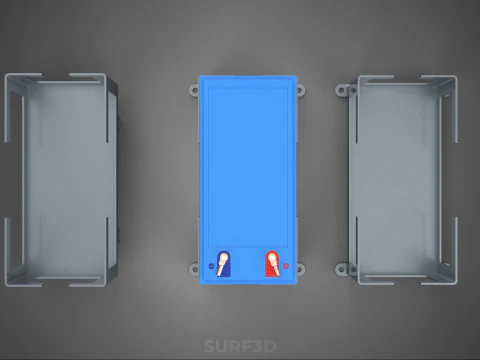
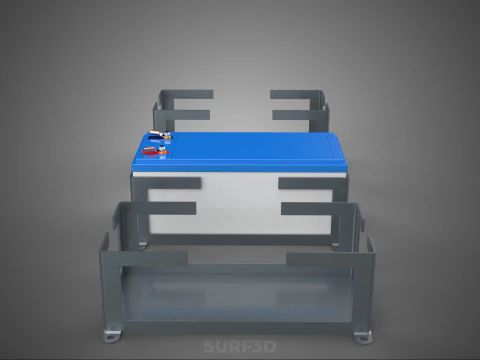
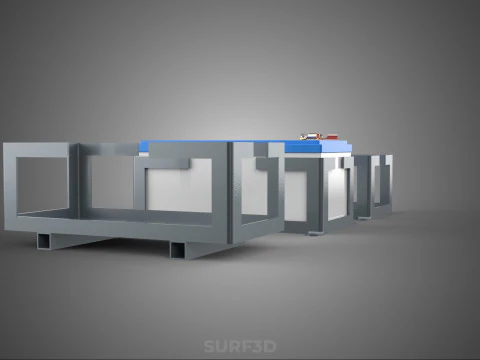
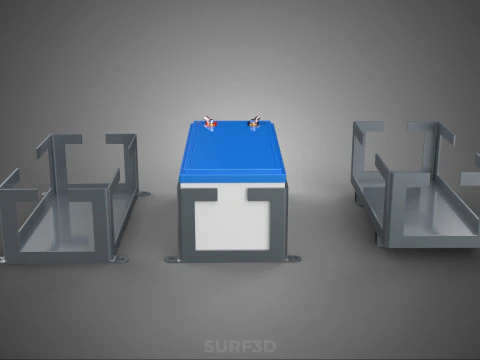
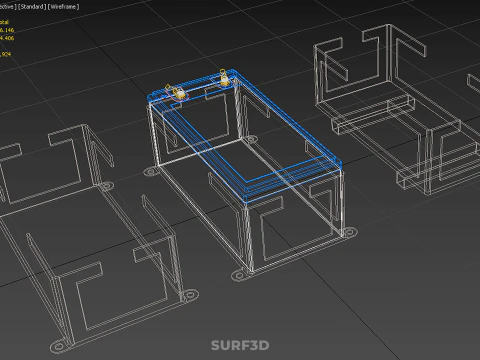
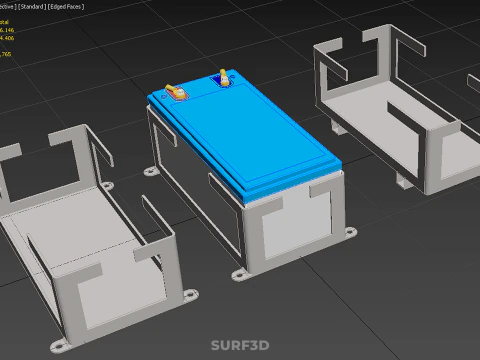
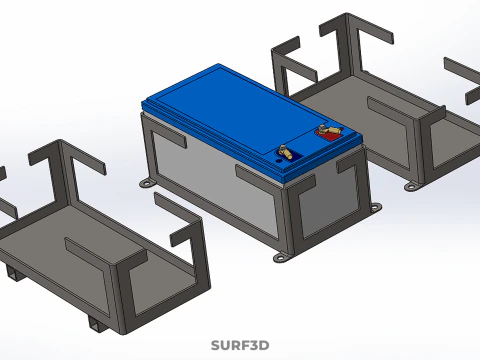
ENCLOSURE BRACKET TRAY BATTERY HOUSING ACCU HOLDER MOUNT RACK AH 3D Model





- Request product support by the author


- Available formats:
- Item ID:620966
- Date: 2026-01-01
- Polygons:16146
- Vertices:14406
- Animated:No
- Textured:No
- Rigged:No
- Materials:Yes
- Low-poly:No
- Collection:No
- UVW mapping:No
- Plugins Used:No
- Print Ready:No
- 3D Scan:No
- Adult content:No
- PBR:No
- AI Training:No
- Geometry:Poly NURBS
- Unwrapped UVs:Unknown
- Views:567
Description
High-quality 3D assets at affordable prices — trusted by designers, engineers, and creators worldwide. Made with care to be versatile, accessible, and ready for your pipeline.
Included File Formats
This model is provided in 14 widely supported formats, ensuring maximum compatibility:
• - FBX (.fbx) – Standard format for most 3D software and pipelines
• - OBJ + MTL (.obj, .mtl) – Wavefront format, widely used and compatible
• - STL (.stl) – Exported mesh geometry; may be suitable for 3D printing with adjustments
• - STEP (.step, .stp) – CAD format using NURBS surfaces
• - IGES (.iges, .igs) – Common format for CAD/CAM and engineering workflows (NURBS)
• - SAT (.sat) – ACIS solid model format (NURBS)
• - DAE (.dae) – Collada format for 3D applications and animations
• - glTF (.glb) – Modern, lightweight format for web, AR, and real-time engines
• - 3DS (.3ds) – Legacy format with broad software support
• - 3ds Max (.max) – Provided for 3ds Max users
• - Blender (.blend) – Provided for Blender users
• - SketchUp (.skp) – Compatible with all SketchUp versions
• - AutoCAD (.dwg) – Suitable for technical and architectural workflows
• - Rhino (.3dm) – Provided for Rhino users
Model Info
• - All files are checked and tested for integrity and correct content
• - Geometry uses real-world scale; model resolution varies depending on the product (high or low poly)
• • - Scene setup and mesh structure may vary depending on model complexity
• - Rendered using Luxion KeyShot
• - Affordable price with professional detailing
Buy with confidence. Quality and compatibility guaranteed.
If you have any questions about the file formats, feel free to send us a message — we're happy to assist you!
Sincerely,
SURF3D
Trusted source for professional and affordable 3D models.
More Information About 3D Model :
The Battery Housing, alternatively termed an Accumulator Mount, Tray, or Enclosure, is a critical passive mechanical subsystem designed to physically support, secure, and protect electrochemical energy storage units (batteries or accumulators) within an integrated functional system. These structures are universally employed across industrial, commercial, and mobile applications to ensure the stability, operational integrity, and safety of the energy storage component.
### I. Nomenclature and Structural Typology
The descriptive title—encompassing terms like Bracket, Tray, Housing, Holder, and Rack—reflects the variety of structural configurations and functional requirements specific to the installation context:
1. **Tray/Rack:** Typically an open-structure component designed primarily for horizontal or vertical weight support and fixation. Trays usually secure the base of the battery and include minimal lateral or vertical enclosure, commonly found in stationary power systems (e.g., server farms, telecommunications shelters).
2. **Housing/Enclosure:** Represents a comprehensive protective shell, often partially or fully sealed, intended to shield the battery unit from environmental ingress (dust, moisture), thermal extremes, or physical impact. Housings are essential for battery systems situated in exposed locations, marine environments, or high-vibration mobile applications.
3. **Bracket/Mount/Holder:** Refers to the securing mechanism utilized to rigidly fix the battery—either the entire tray or the battery casing directly—to the frame, chassis, or cabinet structure, often employing clamping bars, tension straps, or direct bolt-down connections.
The design specifications of these supports are intrinsically linked to the battery’s Ampere-Hour (AH) rating, as this metric correlates directly with the battery’s physical dimensions, mass, and required thermal envelope.
### II. Functional Requirements and Engineering Imperatives
The primary function of the enclosure bracket tray assembly is multi-faceted, addressing structural integrity, operational safety, and maintenance accessibility:
#### A. Structural Support and Dynamics
The mount must withstand significant static loads (the mass of the accumulator) and dynamic loads induced by operation. Dynamic forces include road shock, vibrational harmonics, and seismic activity (for stationary systems). Engineering design prioritizes minimizing stress concentration points and ensuring the rigid fixation necessary to prevent battery movement, which could lead to physical damage, terminal fatigue, or short-circuiting. For internal combustion engine (ICE) vehicle applications, the assembly must specifically isolate the battery from engine-induced vibrations that could compromise the battery’s internal plate structure.
#### B. Thermal Management
Battery performance and lifespan are highly dependent on temperature control. The housing often plays a vital role in thermal regulation by facilitating passive cooling (convective air flow around the unit) or acting as a heat sink. In high-power applications, the housing design may integrate provisions for active cooling systems (e.g., liquid cooling lines) or ventilation ports to manage heat generated during charging and discharge cycles.
#### C. Safety and Compliance
In regulated environments, the enclosure provides essential safety features:
1. **Spillage Containment:** For lead-acid batteries, the tray often incorporates a lip or reservoir to contain electrolyte leakage, preventing damage to surrounding structures or personnel injury.
2. **Electrical Isolation and Grounding:** The housing secures the battery in a predetermined position relative to the main electrical system. In specific designs, the structure may serve as the necessary ground plane connection or, conversely, utilize non-conductive materials to ensure complete electrical isolation from the host chassis.
3. **Impact Protection:** The housing acts as the primary barrier protecting the battery cells from external physical forces, crucial in electric vehicle crash structures or military equipment.
### III. Materials Science and Fabrication
The choice of material is governed by the operating environment, required strength, corrosion resistance, and thermal conductivity.
* **Metals:** Galvanized steel and stainless steel are widely used for heavy-duty applications due to their high yield strength and resistance to mechanical deformation. Aluminum alloys are favored where weight reduction is paramount (e.g., aerospace and electric vehicles) and offer inherent corrosion resistance.
* **Polymers and Composites:** High-density polyethylene (HDPE), polypropylene, and specialized fiber-reinforced composites are utilized where chemical resistance to acids (electrolyte) and non-conductivity are required. These materials are fabricated via injection molding or thermoforming, offering excellent vibration damping properties.
Fabrication must ensure robust, durable joints, typically achieved through specialized welding techniques, high-strength fastening systems, or seamless molding processes to maintain structural integrity throughout the equipment's lifespan.
### IV. Applications
Battery enclosures are fundamental components in:
* **Automotive and Transportation:** Securing SLI (Starting, Lighting, Ignition) batteries in traditional vehicles and high-voltage traction battery packs in Electric Vehicles (EVs) and Hybrid Electric Vehicles (HEVs).
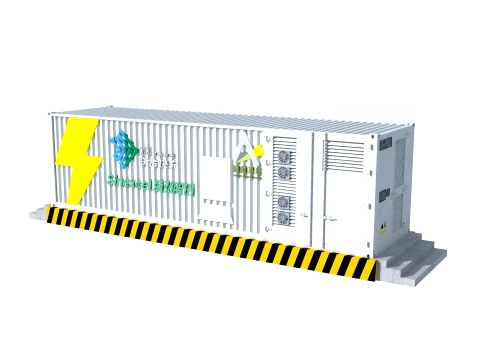
* **Industrial and Energy Storage:** Mounting large-format batteries in Uninterruptible Power Supply (UPS) systems, telecommunication infrastructure, and commercial grid-scale energy storage solutions (ESS).
* **Marine and Off-Grid:** Providing secure, highly corrosion-resistant enclosures for batteries on boats, remote sensing equipment, and solar power installations.
Need more formats?
If you need a different format, please send us a Conversion Request. We can convert 3D models to: .stl, .c4d, .obj, .fbx, .ma/.mb, .3ds, .3dm, .dxf/.dwg, .max. .blend, .skp, .glb. Free Format ConversionWe do not convert 3d scenes and solid formats such as .step, .iges, .stp, .sldprt etc!
Usage Information
ENCLOSURE BRACKET TRAY BATTERY HOUSING ACCU HOLDER MOUNT RACK AH - You can use this royalty-free 3D model for both personal and commercial purposes in accordance with the Basic or Extended License.The Basic License covers most standard use cases, including digital advertisements, design and visualization projects, business social media accounts, native apps, web apps, video games, and physical or digital end products (both free and sold).
The Extended License includes all rights granted under the Basic License, with no usage limitations, and allows the 3D model to be used in unlimited commercial projects under Royalty-Free terms.
Read more
Do you provide Money Back Guarantee?
Yes, we do. If you purchased a product and found some error in the renders or description, we'll try to fix the problem as soon as possible. If we cannot correct the error, we will cancel your order and you will get your money back within 24 hours from downloading the item. Read more conditions hereKeywords