


 Español
 Deutsch
 日本語
日本語 Polska
 Français
 한국의
한국의 Українська
 Italiano
 Nederlands
 Türkçe
 Português
 Bahasa Indonesia
 Русский
 中國
中國 हिंदी
हिंदी
















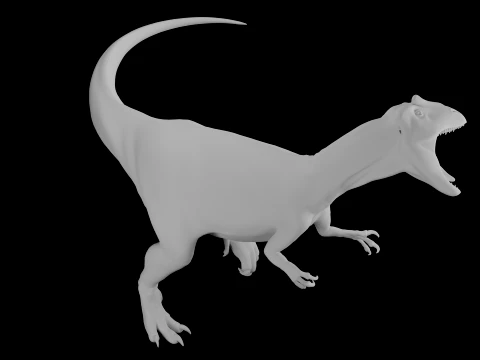
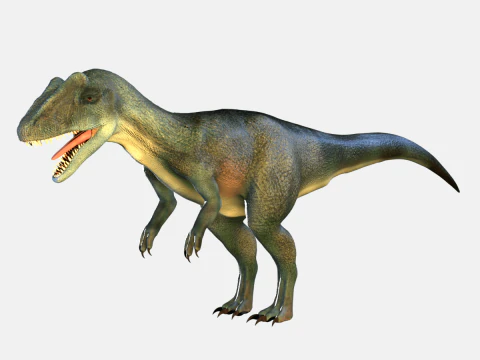
allosaurus 3D Models
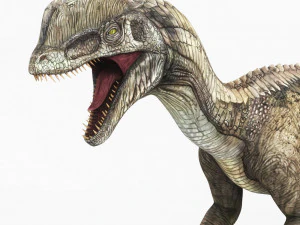
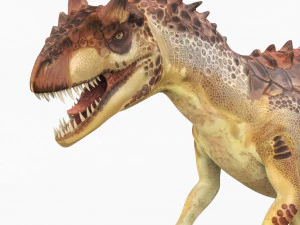
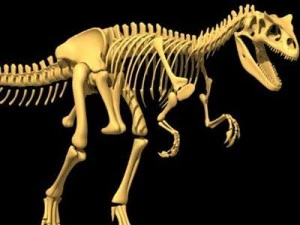
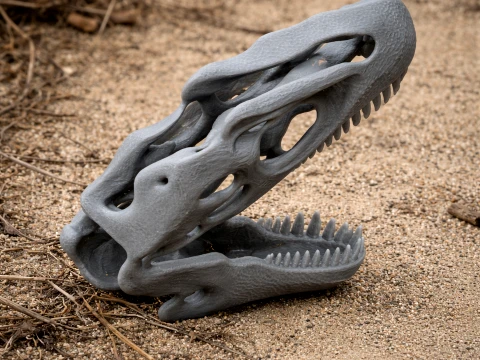
We have 26 item(s) Royalty free allosaurus 3D Models. Buy or download free 3D models for your CG projects, film and video production, animation, visualizations, games, VR/AR, and others. You can download any 3d model in all popular 3d formats including MAX, OBJ, FBX, 3DS, STL, C4D, BLEND, MAYA
 unbreakableAnimals
 unbreakableAnimals










Trending searches 3D Models:
Sculpture 3D Models Characters 3D Models Kitchen 3D Models Horse 3D Models Architectural Exteriors 3D Models Phone and Cell Phone 3D Models Vegetable 3D Models Jewellery 3D Models Toys 3D Models Medical 3D Models Helicopter 3D Models Heavy Weapon 3D Models Truck 3D Models Anatomy 3D ModelsQ1: How does Allosaurus differ from T-Rex as a 3D model subject?
Significantly — they're from different periods and have distinct anatomical profiles. Allosaurus is a Late Jurassic predator (155–150 million years ago), roughly 8–12 meters long, while T-Rex is Late Cretaceous (68–66 million years ago) and longer at 12–13 meters. Key visual differences: Allosaurus has three-fingered forelimbs with large functional claws (T-Rex had two tiny vestigial arms), a slightly smaller and more elongated skull with prominent brow ridges above each eye, and a proportionally longer neck relative to body mass. Models that simply rescale a T-Rex with different head geometry miss the fundamental body proportion differences. For scientifically accurate educational models, these distinctions matter; for general "scary dinosaur" game use, less so.
Q2: What is the current scientific consensus on Allosaurus appearance for 2026 models?
The field has moved toward a more feathered, birdlike interpretation for many theropod dinosaurs, but Allosaurus is generally depicted with scales rather than prominent feathers by most paleontologists — it's a large theropod and there's evidence suggesting scale-covered skin for the body, though some feather-like structures on specific body regions aren't ruled out. More significant is the lip debate: like T-Rex, Allosaurus probably had lips covering its teeth rather than the exposed-teeth crocodilian look of older reconstructions. The eye placement and brow ridge geometry give Allosaurus a distinctive facial profile that doesn't need the exposed-tooth design to look threatening — the brow ridges alone give it an aggressive, heavy-browed expression.
Q3: What animation cycles are most useful for a game-ready Allosaurus?
Eight cover the major scenarios. Idle standing: subtle breathing movement, occasional head scans. Walk: slow quadruped-hip theropod walk with tail counterbalancing head movement. Run: faster version with more pronounced lean and longer stride. Alert: body raised, head up, responding to stimulus. Attack bite: rapid head lunge with jaw open and snap. Claw swipe: forelimb attack leveraging those large three-fingered claws. Roar: head back, jaw open, chest expanded — the signature dramatic moment. Death: ragdoll-compatible collapse. The claw swipe is Allosaurus-specific and differentiates it from T-Rex in gameplay — Allosaurus should feel like a creature that uses its arms as weapons, not a head-focused predator.
Q4: Can Allosaurus 3D models be used in museum interactive installations?
Absolutely — natural history museums increasingly use 3D dinosaur models in AR and interactive display contexts. The Field Museum, Natural History Museum London, and Smithsonian have all used digital dinosaur visualizations in recent years. For museum use, scientific accuracy is important: consult with a paleontologist on proportions if the installation is educational rather than entertainment. The model needs to run in the target hardware — often a kiosk-mounted display or tablet AR experience — which constrains polygon budget to 30,000–80,000 tris for real-time interactive use. Museum-quality still renders can use the full high-polygon version. Interactive AR experiences for museum visitors need the optimized version that runs at 60fps on the hardware.