


 Español
 Deutsch
 日本語
日本語 Polska
 Français
 한국의
한국의 Українська
 Italiano
 Nederlands
 Türkçe
 Português
 Bahasa Indonesia
 Русский
 中國
中國 हिंदी
हिंदी
















knight 3D Models
We have 2212 item(s) Royalty free knight 3D Models. Buy or download free 3D models for your CG projects, film and video production, animation, visualizations, games, VR/AR, and others. You can download any 3d model in all popular 3d formats including MAX, OBJ, FBX, 3DS, STL, C4D, BLEND, MAYA
- -30%
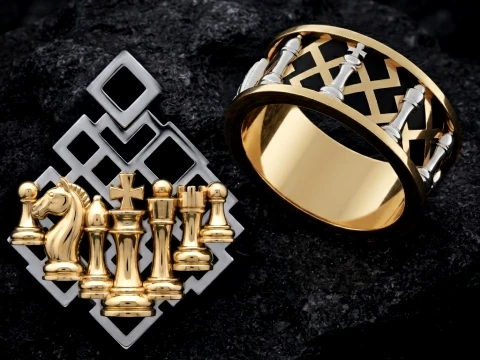 Avera3dPendants




































Trending searches 3D Models:
Sculpture 3D Models Characters 3D Models Kitchen 3D Models Horse 3D Models Architectural Exteriors 3D Models Phone and Cell Phone 3D Models Vegetable 3D Models Jewellery 3D Models Toys 3D Models Medical 3D Models Helicopter 3D Models Heavy Weapon 3D Models Truck 3D Models Anatomy 3D ModelsQ1: What armor types are represented in knight 3D models on 3DExport?
The catalog spans the full evolution of European plate armor. Early medieval: chainmail hauberk with nasal helmet, characteristic of 11th–12th century knights. Transitional armor: plate pieces over chainmail, 13th–14th century. Full plate harness: the complete articulated plate armor of the 15th century — the aesthetic most associated with "knight" in popular imagination. Tournament armor: heavier, less mobile variants built for jousting rather than combat. Fantasy armor: original designs that borrow from historical plate but add stylistic elements — ornate engraving, unusual silhouettes, magical visual language. Historical accuracy in period-correct models matters for film and museum use; fantasy games have more creative latitude.
Q2: What makes a knight armor 3D model animatable?
Plate armor presents a specific rigging challenge — real plate armor moves through a system of articulated plates connected by riveted lames and leather straps. The geometry needs to be split into separate movable components at every joint: pauldrons (shoulder), rerebraces and vambraces (upper and lower arm), couters (elbow), gauntlets (fingers individually jointed), cuirass (torso front and back as separate pieces), faulds (waist lames), tassets (hip plates), cuisses and greaves (upper and lower leg), and sabatons (foot). Each component needs its own pivot point and a small gap between adjacent plates to prevent clipping during movement. Models that bake the full armor as one mesh can't animate without severe clipping artifacts.
Q3: What are the most common uses for knight 3D models in game development?
Fantasy RPGs and action-adventure games are the primary market — knight characters appear as player avatars, NPC guards, boss enemies, and faction-representing soldiers. The modular armor system is particularly valuable in RPGs with equipment progression: separate helmet, chest, arm, leg, and foot armor meshes that share a skeleton allow mixing and matching equipment tiers without unique full-character models for every combination. For this system, each armor component needs consistent bone weighting across the shared skeleton. Dark Souls-style games specifically have elevated the visual and mechanical importance of knight enemy design — heavily armored, deliberate, threatening knights are a genre staple with high production value expectation.
Q4: What material setup makes plate armor look realistic in Blender?
Steel plate armor: Metallic 1.0, Roughness 0.2–0.3 for polished parade armor, 0.4–0.5 for battle-worn field armor. The edge chamfers on each plate piece are critical — they catch specular highlights that define the forms as individual plates rather than a continuous surface. Add a subtle scratching pattern using an anisotropic scratch normal map — real armor shows draw marks from polishing, parallel micro-scratches in the direction of the final polish strokes. For worn or battle-damaged armor, add dents as sculpted geometry (not just normal map — actual mesh deformation at impact sites), rust staining using a roughness variation mask at edges and recesses, and chainmail texture visible at gaps between plates. Chainmail is best represented as a tileable normal map rather than geometry at game resolution.